Training for a half marathon is one of the best things you can do as a runner. Twelve weeks is enough time to build endurance safely if you can already run about 5 to 8 km comfortably. This plan is built for 4 runs a week and works for first-timers and for runners chasing a new best time.
The short answer
A good half marathon training plan lasts 10 to 16 weeks, with 3 to 5 runs a week: one long run that builds to 16 to 20 km, one tempo or goal-pace session, easy runs in between, an easier week every 3 to 4 weeks and a 1 to 2 week taper.
Before you start
- You can run 5 to 8 km without stopping, about 3 times a week.
- You run about 15 to 25 km a week now. If less, spend a month building first.
- You have no current injuries. A niggle now will grow as the weeks get longer.
- You know your easy pace: a pace where you can talk in full sentences. See How slow should an easy run be?
The four runs each week
The 12-week plan
| Week | Tuesday | Wednesday | Friday | Long run |
|---|---|---|---|---|
| 1 | 3 × 5 min T | 5 km easy | 5 km easy + strides | 10 km |
| 2 | 3 × 6 min T | 6 km easy | 5 km easy + strides | 11 km |
| 3 | 4 × 6 min T | 6 km easy | 6 km easy + strides | 12 km |
| 4 (easier) | 15 min T | 5 km easy | 5 km easy | 10 km |
| 5 | 3 × 8 min T | 7 km easy | 6 km easy + strides | 13 km |
| 6 | 20 min T | 7 km easy | 6 km easy + strides | 14 km |
| 7 | 3 × 10 min T | 8 km easy | 6 km easy + strides | 16 km |
| 8 (easier) | 20 min T | 6 km easy | 5 km easy | 12 km |
| 9 | 2 × 4 km GP | 8 km easy | 6 km easy + strides | 17 km, last 4 km GP |
| 10 | 25 min T | 8 km easy | 6 km easy + strides | 19 km, last 5 km GP |
| 11 (taper) | 2 × 3 km GP | 6 km easy | 5 km easy | 14 km |
| 12 (race) | 3 × 1 km GP | 5 km easy | 3 km easy + strides | Race: 21.1 km |
Weekly distance builds from about 25 km in week 1 to about 40 km in week 10, then drops for the taper. Read How to taper for a race for why the last two weeks are lighter.
What pace for each run?
| Run | Effort | Example for a 2:00 goal |
|---|---|---|
| Easy and long | Conversational, Zone 2 | 6:18 to 7:31 per km |
| Goal pace (GP) | Steady, controlled | 5:38 to 5:41 per km |
| Tempo (T) | Comfortably hard, short phrases | about 5:29 per km |
Going for a specific time? See How to run a sub-2 hour half marathon for detailed paces and race-day checkpoints.
How to adjust the plan
For first-timers
Skip the goal-pace parts and run everything easy except the Tuesday tempo, which you can replace with easy running plus strides. Your aim is to finish feeling strong. A long run of 16 to 18 km is enough.
For experienced runners
Add a fifth easy run, lengthen the long runs to 18 to 21 km, and swap some tempos for intervals (such as 5 × 1 km at 10K pace) every other week.
For 3 runs a week
Keep the tempo and long run, and make the third run easy. The plan still works, with a little less weekly distance.
Practise race-day fuelling
On long runs over 90 minutes, practise what you will do on race day: a gel or sports drink every 30 to 45 minutes, and water. Try your race breakfast before the longer runs in weeks 9 and 10. Race day should feel familiar.
Missed a week?
Life happens. If you miss a few days, carry on with the plan. If you miss a full week, repeat the previous week before moving on. Never try to squeeze two weeks into one. If you were ill, start with a few easy runs before any tempo.
Race week and race day
- Keep the short goal-pace efforts early in race week; rest or jog the day before.
- Start a little slower than goal pace for the first 2 km.
- Hold steady through 15 km, then push gradually if you feel good.
- Fuel as you practised: nothing new on race day.
Use Windlace to follow your plan
- Set your running days in My Weekly Schedule.
- Set a half marathon target in Break the PR. Windlace rates it as Realistic, Ambitious or Very hard and builds the weeks around your schedule.
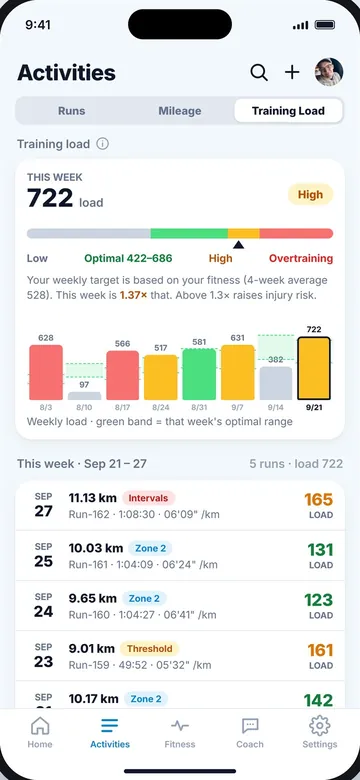
- Watch weekly mileage against your goal line, and training load for sudden jumps.
- Check your half marathon prediction on the Fitness tab as the weeks go by.
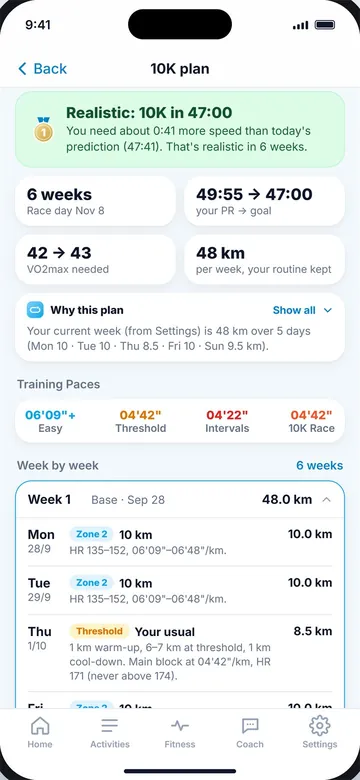
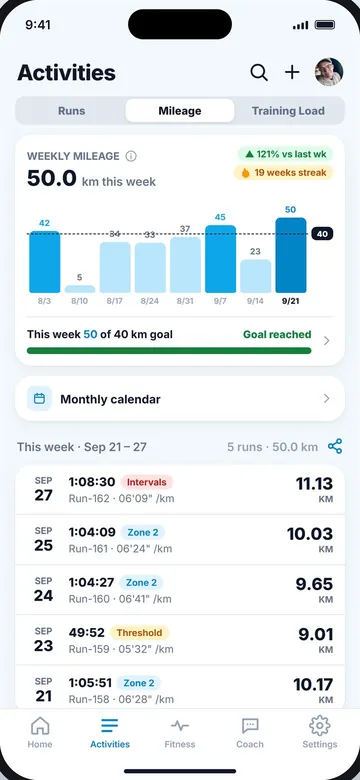
A half marathon plan (left) and weekly mileage (right).
Key takeaways
- Most half marathon plans last 10 to 16 weeks with 3 to 5 runs a week.
- Start when you can run 5 to 8 km comfortably and about 15 to 25 km a week.
- Build the long run from about 10 to 16 to 20 km, with easier weeks every 4th week.
- Keep long runs easy and add goal-pace blocks only in the last month.
- Taper for 1 to 2 weeks and practise fuelling in long runs.
Frequently asked questions
How long does it take to train for a half marathon?
Ten to 16 weeks for most runners who can already run 5 to 8 km. Beginners starting from zero need longer.
How many days a week should I train for a half marathon?
Three to 5. This plan uses 4: a tempo, two easy runs and a long run.
What is the longest run before a half marathon?
Usually 16 to 20 km, 2 to 3 weeks before race day.
Can I train for a half marathon in 8 weeks?
Yes, if you already run about 25 to 30 km a week with long runs of 10 to 12 km.
Should I run 21 km before the race?
It is not necessary. A long run of 16 to 20 km prepares most runners well.

Keep reading
RacingHow to run a sub-2 hour half marathonThe pace you need, the fitness it takes, training paces, long runs, a sample week and checkpoint times.10 min read
 TrainingHow long should your long run be?Simple long run rules by race distance and weekly mileage, the right pace, and how fast to build up.9 min read
 RacingHow to taper for a raceHow long to taper for each distance, how much to cut, why to keep some speed, and how form rises on race day.9 min read