After weeks of training, the most important thing you can do before a race is, in a way, less. Tapering means cutting back your training so that the fatigue of hard work clears while the fitness stays. Done well, it can make a noticeable difference to how you feel and how fast you run.
What a taper is
A taper is a planned reduction in training before a race, usually cutting weekly distance by about 40 to 60% over 1 to 3 weeks while keeping some faster running, so you arrive fresh without losing fitness.
A review of taper studies by Bosquet and colleagues (2007) found that the best results came from tapers of about 2 weeks that cut volume by roughly 40 to 60% while keeping intensity and the number of runs about the same. Typical improvements in performance were around 2 to 3%. For a 4-hour marathoner, 2% is nearly 5 minutes.
Why it works
Training builds fitness and fatigue at the same time. Fitness fades slowly, over weeks. Fatigue fades fast, over days. When you cut back, fatigue drops quickly while fitness barely changes, so your "form" (fitness minus fatigue) rises. That is the idea behind the fitness-fatigue model; read Fitness, fatigue and form for the full story.
How long to taper by race distance
| Race | Taper length | Cut in weekly distance |
|---|---|---|
| 5K | 5 to 7 days | About 20 to 30% |
| 10K | 7 to 10 days | About 25 to 40% |
| Half marathon | 10 to 14 days | About 30 to 50% |
| Marathon | 2 to 3 weeks | About 40 to 60% by race week |
Example: a 3-week marathon taper
| Week | Weekly distance | Long run | Key session |
|---|---|---|---|
| 3 weeks out | About 48 km (80%) | 24 km | Tempo or marathon-pace run |
| 2 weeks out | About 38 km (60 to 65%) | 16 to 18 km | Shorter marathon-pace block |
| Race week | About 20 km plus the race | None | 2 to 3 short race-pace efforts early in the week |
Five taper rules
- Cut distance, not frequency. Keep running about as many days, just shorter.
- Keep some speed. Short efforts at race pace keep your legs sharp. Dropping all intensity often leaves runners feeling flat.
- Do not try to gain fitness. No workout in the last 10 days will make you fitter, but a too-hard one can make you tired.
- Sleep and eat well. In the last 2 to 3 days before a half or full marathon, eat a bit more carbohydrate.
- Nothing new. No new shoes, foods, workouts or stretches in race week.
"Taper madness": feeling strange is normal
Many runners feel sluggish, heavy or restless during a taper, especially in the first week of cutting back. Small aches appear that were not there before, and some feel they are losing fitness. This is common and usually means nothing. Your body is repairing and storing energy. Trust the plan, keep the short race-pace efforts, and save your energy for race day.
Race week checklist
- Two to three short runs with a few minutes at race pace early in the week.
- Rest or a very short jog the day before, with 3 or 4 short strides if you like.
- Plan your pacing using a realistic goal. See Race time predictions.
- Lay out your kit the night before, and stick to a breakfast you have tried before.
Eating and sleeping during the taper
You burn fewer calories in a taper, but this is not the time to diet. Eat normally, with plenty of carbohydrate in the last 2 to 3 days before a half or full marathon, and drink well. Sleep is just as important: nerves often ruin the night before a race, so aim for good sleep across the whole week, not just the last night. One poor night before a race rarely affects performance if the nights before were good.
Shorter races, shorter tapers
For a 5K or 10K, you do not need weeks off. A few easier days, with one short session of race-pace reps 3 to 4 days before, is enough. Many runners race short distances well on a "mini taper" of just 3 to 5 days, especially when the race is not their main goal of the season.
See your taper in Windlace
- Watch fitness, fatigue and form on the Fitness tab. During a good taper, fatigue drops and form climbs into a fresh range.
- Check training load: in taper weeks it should drop to Low, which is fine for rest weeks.
- Check your race prediction to set your pace, and your recovery each morning.
- Follow your Break the PR plan: it includes the taper weeks before your goal race.
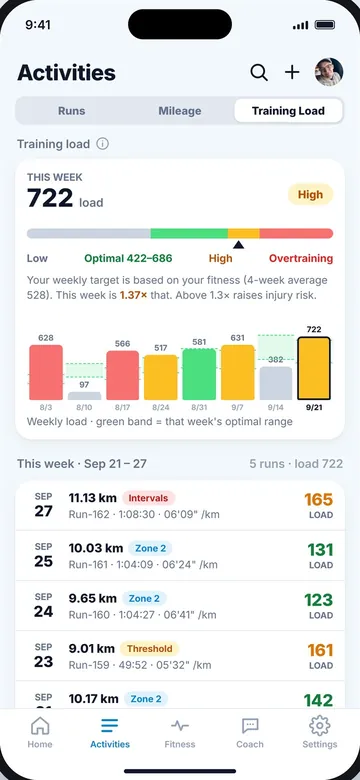
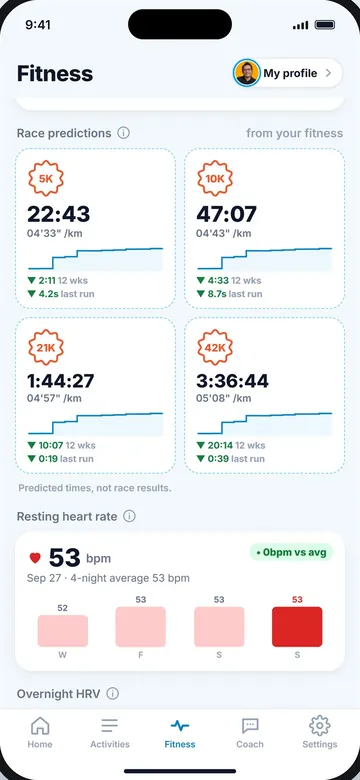
Training load (left) and race predictions (right).
Key takeaways
- A taper cuts training before a race so fatigue clears while fitness stays.
- Studies favour about 2 weeks and a 40 to 60% cut in volume, keeping intensity and frequency.
- Taper about a week for 5K and 10K, 10 to 14 days for a half and 2 to 3 weeks for a marathon.
- Keep short race-pace efforts; do not add hard workouts or anything new in race week.
- Feeling sluggish during a taper is normal and usually means nothing.
Frequently asked questions
How long should I taper for a marathon?
Most runners taper for 2 to 3 weeks, cutting weekly distance gradually to about 40 to 60% of peak by race week.
How long is a half marathon taper?
About 10 to 14 days, with weekly distance cut by roughly 30 to 50%.
Should I run fast during a taper?
Yes, a little. Short efforts at race pace keep your legs sharp without adding fatigue.
Will I lose fitness during a taper?
Very little. Fitness fades over weeks, while fatigue clears in days, so a taper leaves you fitter on race day.
Why do my legs feel heavy during a taper?
It is very common. Your body is storing extra carbohydrate and water and repairing muscles. Heavy legs in the taper usually feel fresh on race day.
Should I taper for every race?
Only for your goal races. For practice races or parkruns, a couple of easier days is enough.
What should I do the day before a race?
Rest or jog 15 to 20 minutes with a few short strides, eat familiar food and get your kit ready.

Keep reading
RacingFitness, fatigue and form: are you ready to race?The simple model coaches use to balance fitness and tiredness, and how to taper so you arrive at race day fit and fresh.10 min read
 TrainingHow long should your long run be?Simple long run rules by race distance and weekly mileage, the right pace, and how fast to build up.9 min read
RacingHow accurate are race time predictions?How predictors work, why the marathon number is often too fast, and how to turn a prediction into a smart race plan.9 min read