Race time predictors are everywhere: in watches, apps and online calculators. Type in one race and they give you times for every other distance. They are a great starting point, but they are not promises. Knowing how they work tells you when to trust them.
What a race time prediction is
A race time prediction is an estimate of what you could run at another distance today, on a flat course, based on your current fitness. It is not a race result, and it assumes you are trained for that distance and pace it well.
How predictions are worked out
The Riegel formula
In 1977, engineer Pete Riegel noticed that as races get longer, runners slow down in a very regular way. His formula is still the most used:
New time = old time × (new distance ÷ old distance)1.06
Doubling the distance takes a bit more than double the time: about 2.08 times. Example: a 25:00 5K predicts 25:00 × 21.06 ≈ 52:07 for 10K.
Predictions from a 25:00 5K and a 50:00 10K
| Your race | 10K | Half marathon | Marathon |
|---|---|---|---|
| 5K in 25:00 | 52:07 | 1:55:00 | 3:59:47 |
| 10K in 50:00 | — | 1:50:19 | 3:50:01 |
VDOT and fitness-based predictions
Coach Jack Daniels' VDOT system turns your race time into a fitness level, then gives equal times for other distances from tables built on real runners. Many apps, including Windlace, predict from a fitness level worked out from all your recent runs, not just one race. That makes the prediction steadier: one bad day does not drag it down.
How accurate are they?
For races close to the one you ran, predictions are usually quite good. A 5K predicting a 10K, or a 10K predicting a half marathon, is often within a minute or two for a trained runner.
The further you go, the less accurate they get. The marathon is the big one: a study of thousands of recreational runners by Vickers and Vertosick (2016) found that the Riegel formula predicted marathon times that were too fast for many runners, especially those running fewer kilometres a week.
| Prediction | How much to trust it |
|---|---|
| 5K → 10K | Usually close |
| 10K → half marathon | Good if you have done long runs |
| 5K → marathon | Often too fast |
| Half → marathon | Good if your training was marathon-specific |
Why predictions are often too fast for long races
How to use a prediction well
- Predict from a recent race (last 6 to 8 weeks), close to your goal distance if you can. A 10K or half is better than a 5K for a marathon.
- Check your training. If your longest runs and weekly kilometres are low for the distance, add a few minutes to the prediction.
- Adjust for the course and weather. Hilly or hot? Plan to run slower.
- Start a little slower than goal pace. Run the first few kilometres 5 to 10 seconds per km slower, then settle in.
- Update as you train. Predictions move with your fitness, so check them every few weeks.
How to see your race predictions in Windlace
- Add your runs. No race needed: Windlace uses your fitness level from all your recent runs.
- Open the Fitness tab. See predicted times for 5K, 10K, half marathon and marathon on a flat course.
- Check the trend. A small line shows the last 12 weeks; ▲ shows how much faster you got.
- Set a PR goal. The Break the PR plan rates your target as Realistic, Ambitious or Very hard against your prediction.
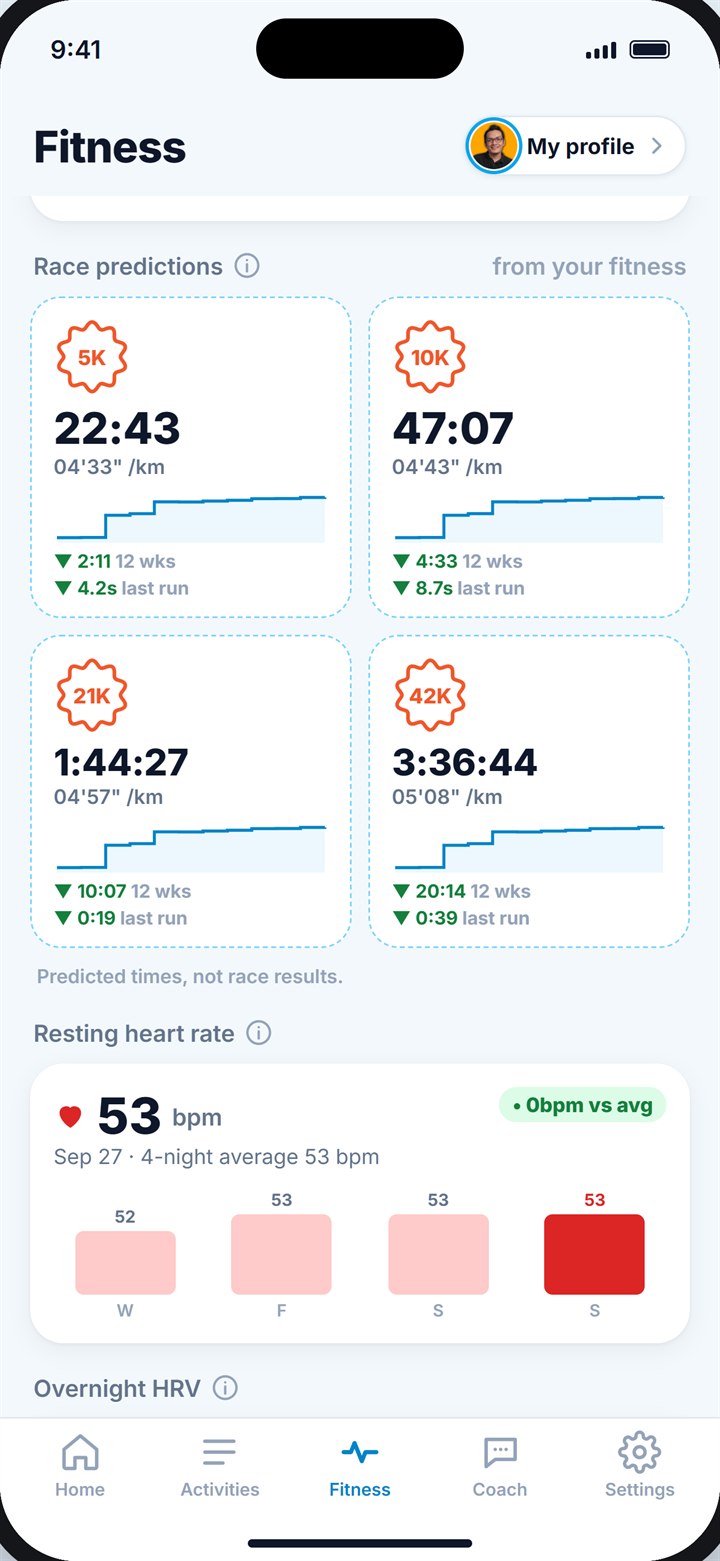
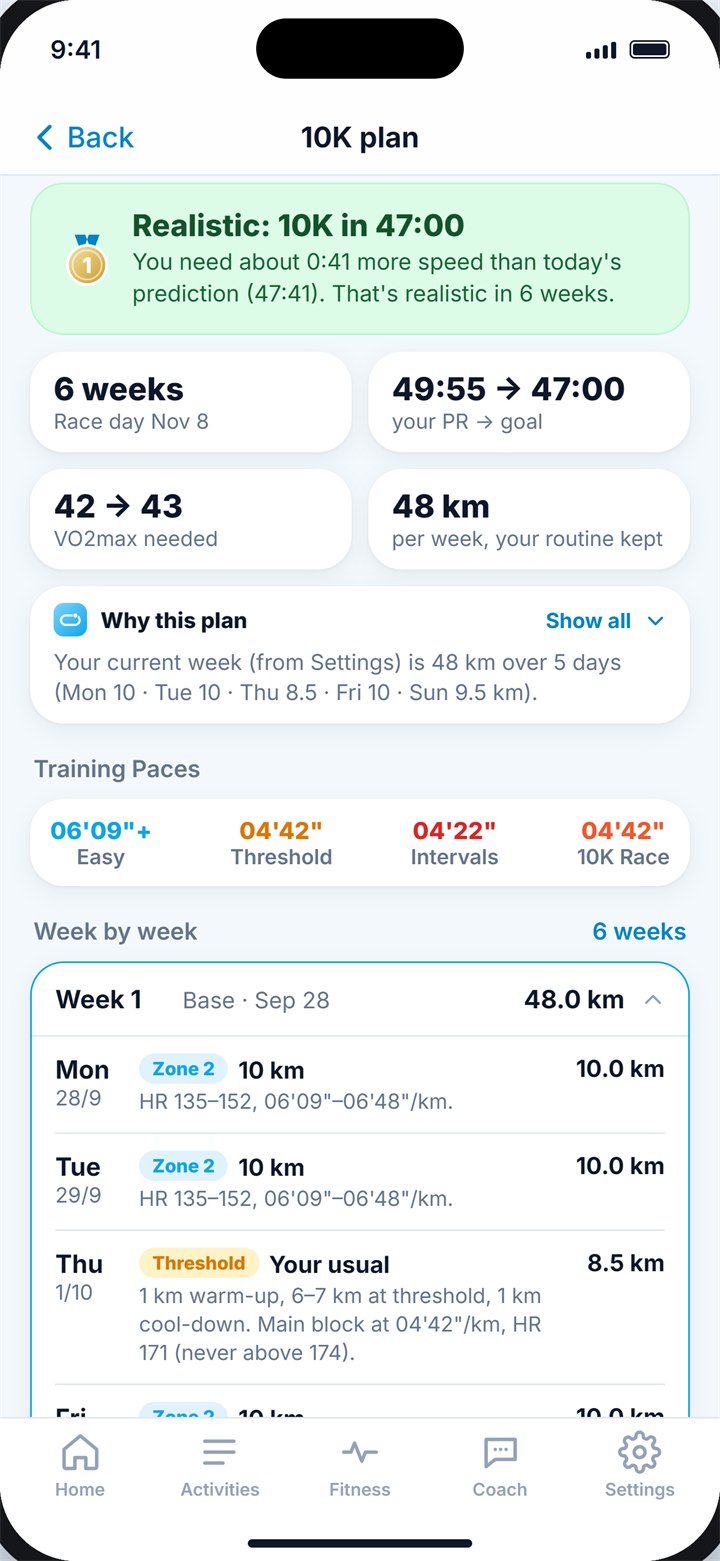
Race predictions (left) and a PR goal rated against them (right).
Key takeaways
- A race prediction is what you could run today on a flat course, not a promise.
- The Riegel formula: new time = old time × (distance ratio)^1.06.
- Predictions are good for nearby distances and often too fast for the marathon.
- Endurance training, fuelling, heat, hills and pacing all matter more over long races.
- Predict from a recent race close to your goal distance and adjust for your training.
Frequently asked questions
How do I predict my marathon time from a half marathon?
A common rule is to double your half time and add about 10 to 20 minutes. The Riegel formula gives about 2.09 times your half. Add a little more if your long runs are short.
Is the Riegel formula accurate?
It is good for races of similar length, roughly between 3.5 minutes and 4 hours of running. For the marathon, it is often too fast for runners with low weekly distance.
Why does my watch predict a faster time than I can run?
Predictions assume ideal conditions and that you are trained for the distance. Long runs, fuelling, heat and pacing all make real races slower.
How often do race predictions update?
Apps that use your recent runs, like Windlace, update after each run. Calculators only change when you enter a new race.
Can I use a training run to predict a race?
A hard, steady effort works, like a time trial. Easy runs do not show your race fitness, which is why Windlace uses your fastest stretches and overall fitness level.

Keep reading
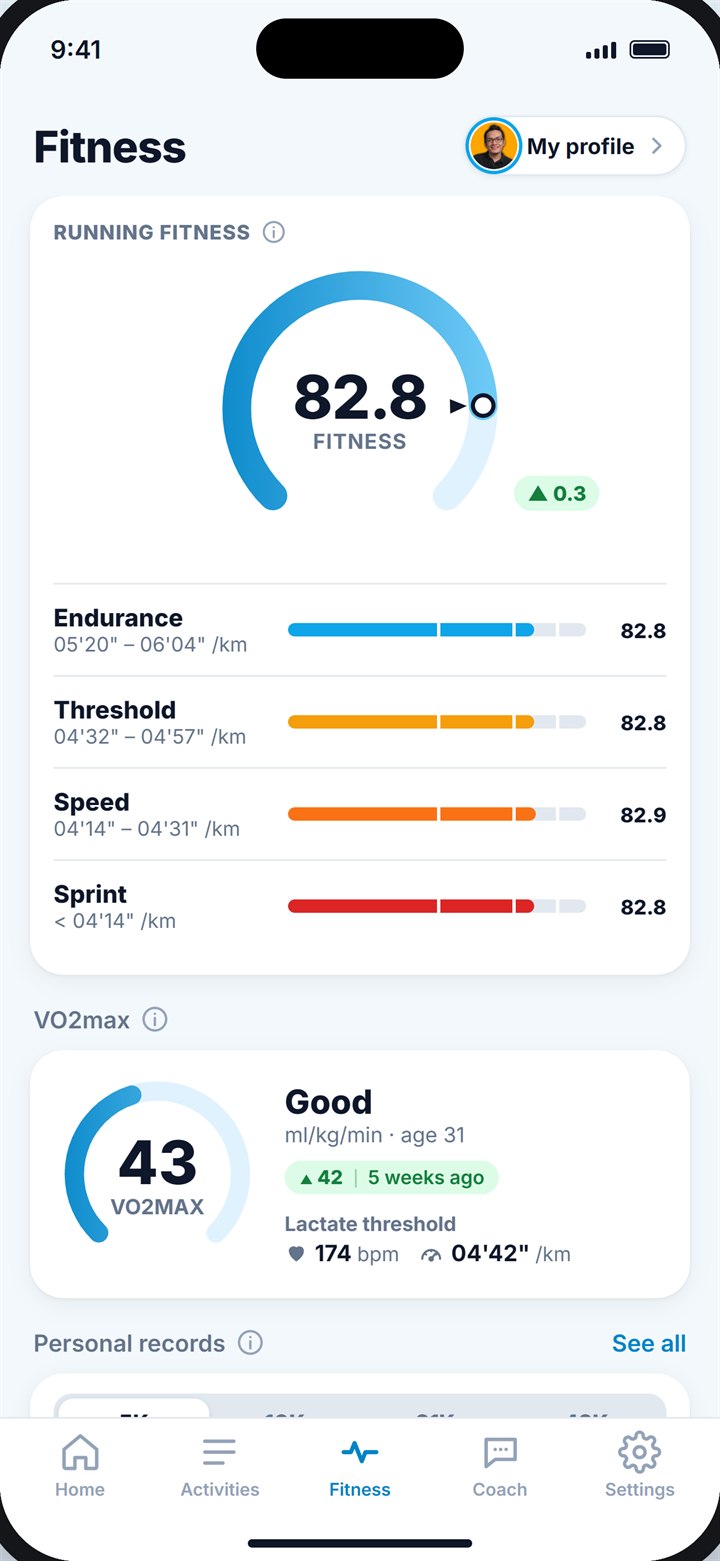 FitnessRunning fitness score explainedOne number for how fit you are for running right now: how it is worked out, what the levels mean, and how to raise it.9 min read
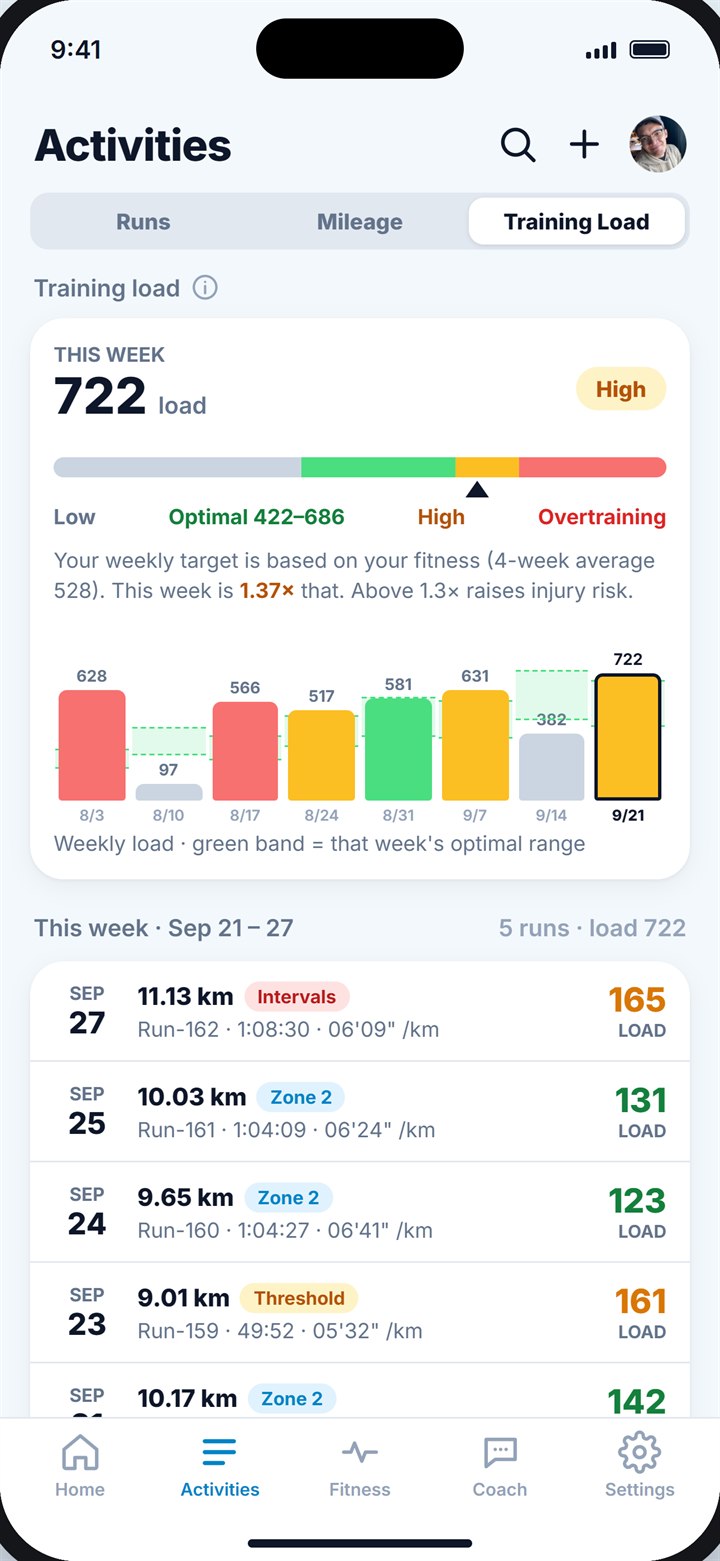 RacingFitness, fatigue and form: are you ready to race?The simple model coaches use to balance fitness and tiredness, and how to taper so you arrive at race day fit and fresh.10 min read
PaceWhat is threshold pace, and how do you find yours?The pace you can hold for about an hour: where it sits next to your race paces, four ways to find it, and how to train with it.10 min read