You finish a run and your watch says "Aerobic 3.2, Anaerobic 1.4". It looks scientific, but what does it actually mean, and should you care? In short: these two numbers tell you what kind of fitness the run built, and how much.
What training effect means
Training effect is a score from 0 to 5 that shows how much a run improved your fitness, compared with what your body is used to. Most sports watches use this scale. A run that matches one normal day of your training keeps your fitness where it is; a bigger dose pushes it up.
There are two scores because running builds two different systems:
The 0 to 5 scale
| Score | Label | What it means |
|---|---|---|
| 0 to 0.9 | No benefit | Too easy or too short to change fitness. |
| 1 to 1.9 | Minor | Good for recovery. |
| 2 to 2.9 | Maintaining | Keeps your current fitness. |
| 3 to 3.9 | Improving | Makes you fitter. |
| 4 to 4.9 | Building fast | Big boost; needs good recovery. |
| 5 | Maxed out | Very hard; take extra rest. |
A useful rule: a run equal to one normal day of your training scores about 2.0. Each time the dose doubles, the score goes up by about 1. That is why the same 10 km can score 3 for a beginner and 2 for an experienced runner.
How each score is worked out
Aerobic: from your heart rate
Aerobic training effect looks at your heart rate over the whole run. The longer you spend and the higher your heart rate, the bigger the dose. Windlace uses Banister's TRIMP method, the same idea behind training load, and compares it with your usual daily training on the day you ran.
Anaerobic: from running above your critical speed
Anaerobic training effect looks at how far you ran faster than your critical speed, roughly the pace you can hold for about an hour (your threshold pace). Easy runs and steady tempo runs spend almost none of their time there, so they score close to 0. Short, fast reps score high.
Which runs raise which score
| Run | Aerobic | Anaerobic | Focus |
|---|---|---|---|
| Recovery jog, 30 min | 1 to 2 | 0 | Recovery |
| Easy run, 45 to 60 min | 2 to 3 | 0 to 0.5 | Base |
| Long run, 90+ min | 3 to 4 | 0 to 1 | Base |
| Tempo run, 20 to 30 min hard | 3 to 4 | 0 to 1 | Tempo or Threshold |
| Intervals, e.g. 6 × 800 m | 3 to 4 | 2 to 4 | VO2max |
| Sprints, e.g. 10 × 100 m | 1 to 2 | 2 to 4 | Anaerobic |
Training focus
Many apps also give each run a focus: the kind of training it mostly was. In Windlace:
How to balance your week
- Most runs: aerobic 2 to 3, anaerobic near 0. Easy running is the base of all running fitness. Around 80% of your running should be easy.
- One or two key sessions: aerobic 3 to 4. A tempo run or intervals, and a long run.
- Anaerobic 2+ once a week at most, unless you are training for short races. It is hard on the body.
- After a 4 or 5, plan an easy day or two. Big scores need recovery to turn into fitness.
How to see training effect in Windlace
- Add your runs with heart rate, from your phone, your COROS watch or a file.
- Open any run. See its aerobic and anaerobic training effect on the 0 to 5 scale, with its label.
- Check its focus: Recovery, Base, Tempo, Threshold, VO2max or Anaerobic.
- Look at your week. Mostly Base, with one or two harder focuses, is a balanced week.
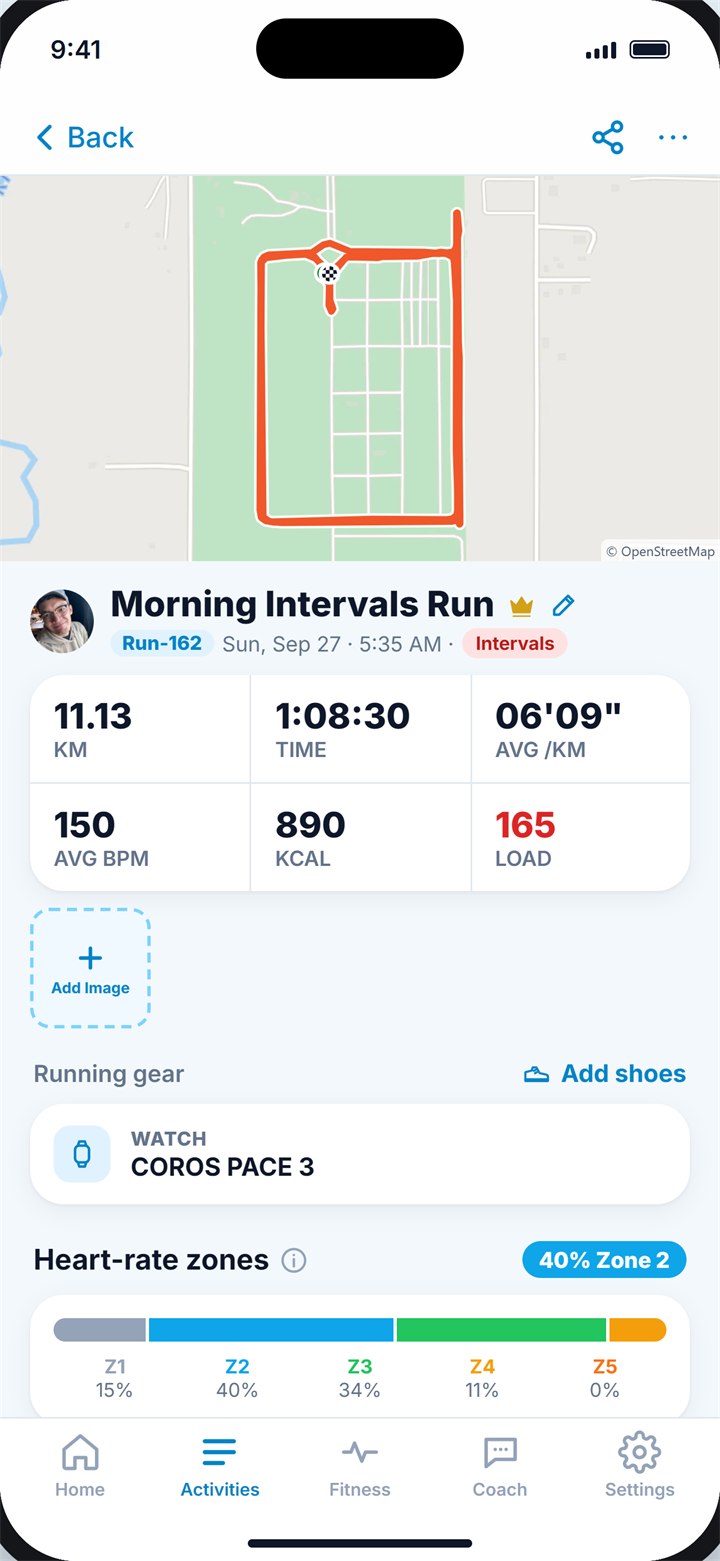
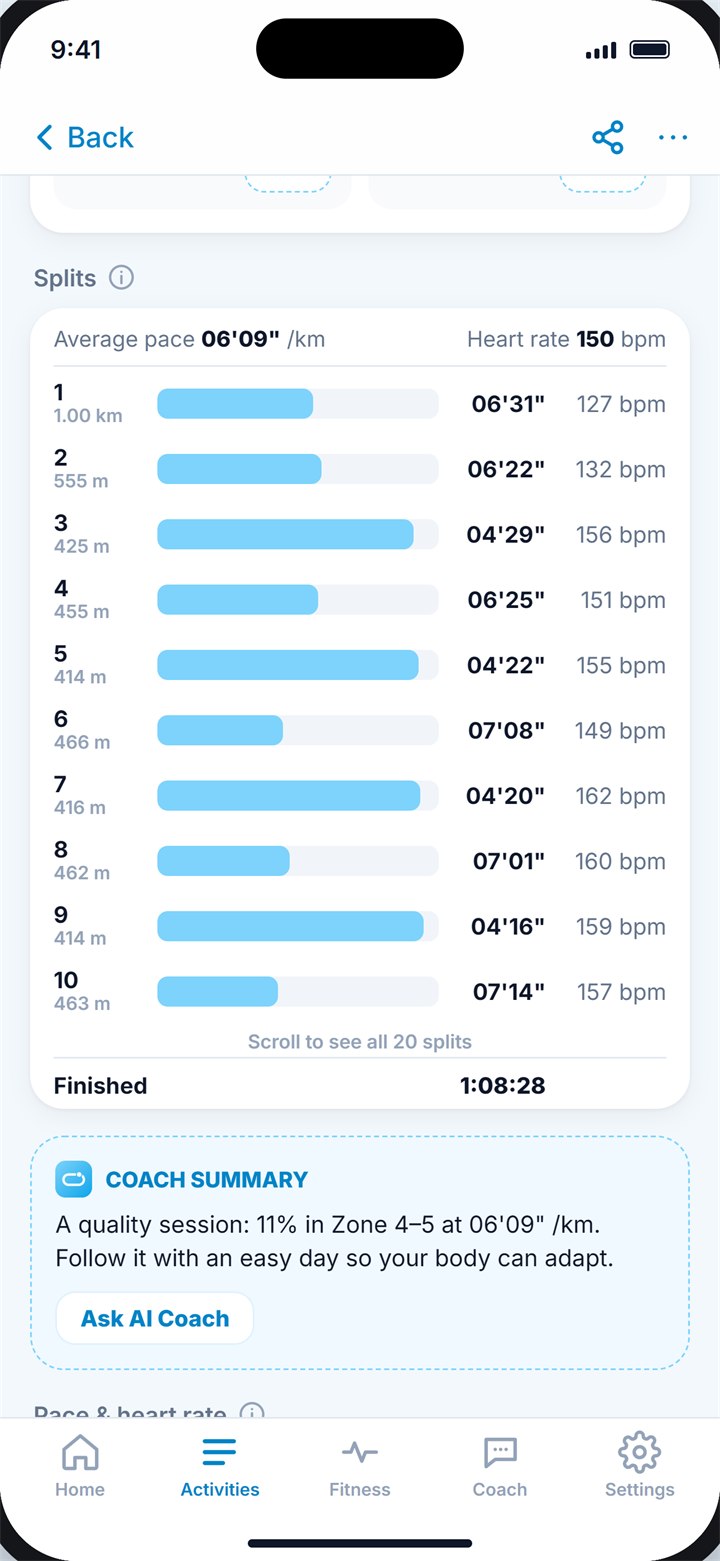
A run's training effect (left) and its splits and zones (right).
Key takeaways
- Training effect scores from 0 to 5 how much a run improved your fitness, compared with what you are used to.
- Aerobic training effect = endurance, from heart rate over the whole run.
- Anaerobic training effect = short, very fast running above your critical speed.
- A normal day of training scores about 2; each doubling of the dose adds about 1.
- Keep most runs easy (aerobic 2 to 3), with one or two harder sessions a week.
Frequently asked questions
What is a good aerobic training effect?
2 to 3 for easy runs is perfect. 3 to 4 for key sessions makes you fitter. Scores of 4 and above are big efforts that need extra recovery.
Why is my anaerobic training effect 0?
Because you did not run faster than your critical speed for long. That is normal and correct for easy runs, long runs and steady tempo runs.
Why did the same run score lower than last month?
You got fitter. The score compares the run with what your body is used to, so the same run is now a smaller dose for you.
Is a training effect of 5 bad?
Not bad, but very hard. It usually means a race or an extreme session. Take a few easy days after it.
Do I need a heart-rate monitor?
For aerobic training effect, yes, heart rate is needed. Anaerobic training effect in Windlace uses your pace against your critical speed.

Keep reading
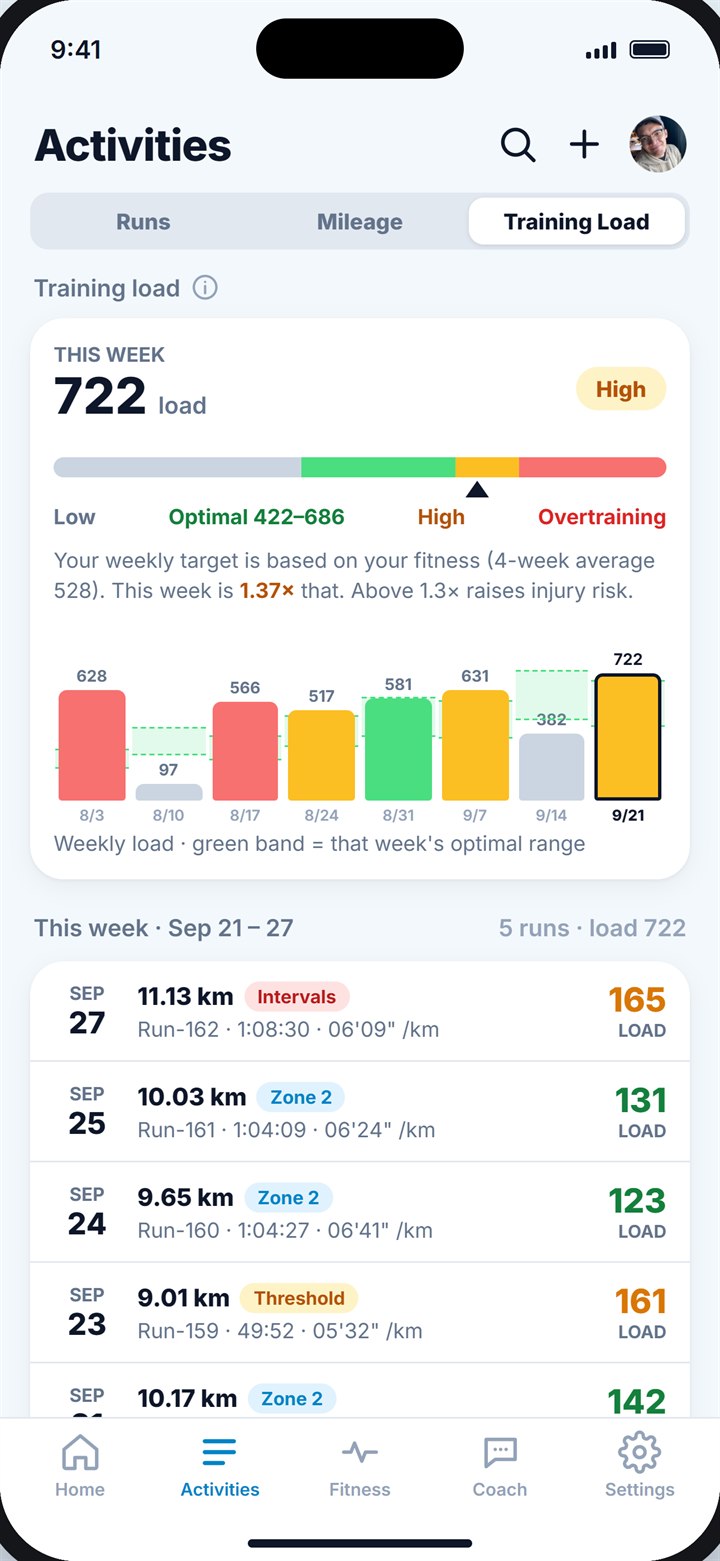 TrainingWhat is training load, and how much is too much?How hard your running really was: how training load is worked out, your optimal range, and how to build up safely.10 min read
RecoveryHow long should you recover after a run?Typical recovery times after easy runs, hard sessions and races, the signs you need more rest, and how to recover faster.9 min read
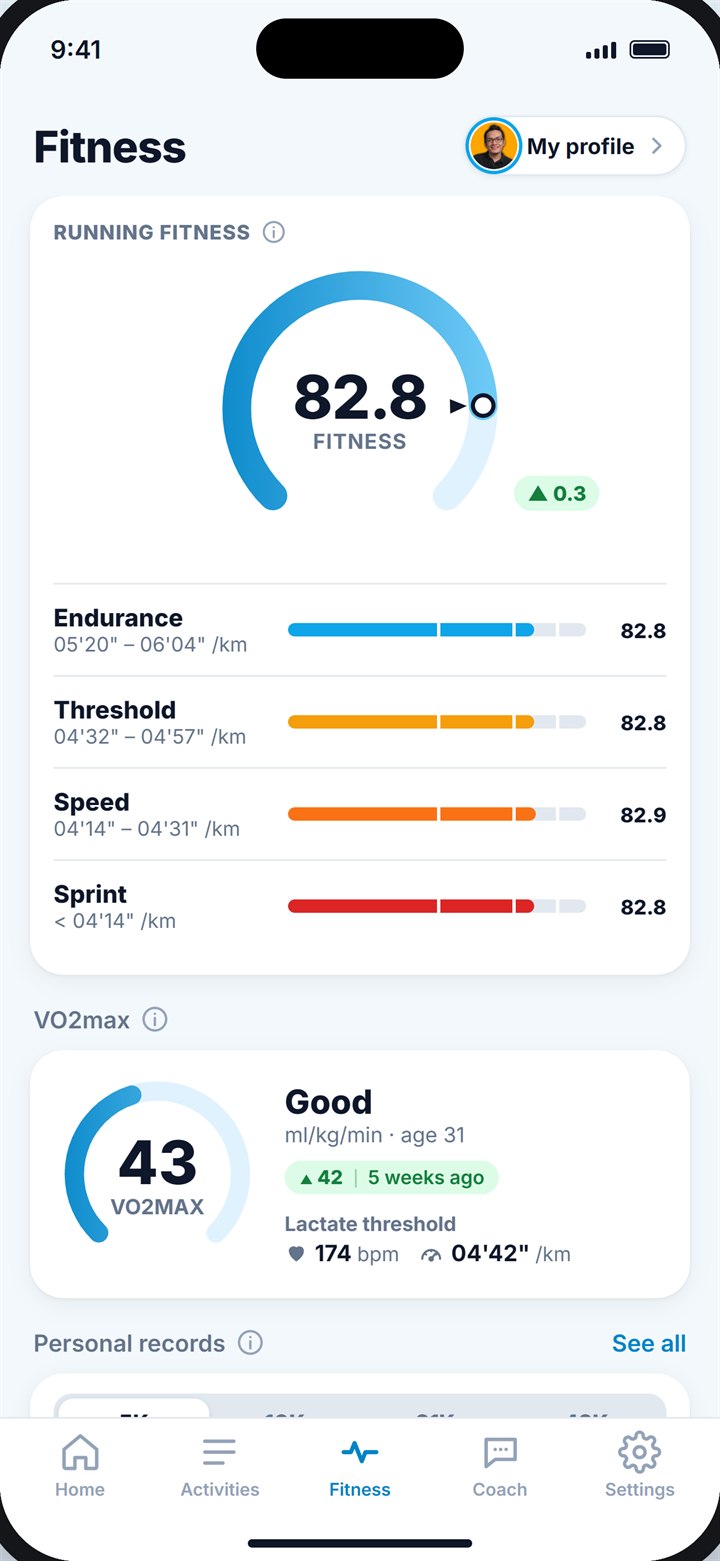 TrainingHow to improve your VO2maxThe workouts that raise VO2max, how often to do them, a sample week, and how long it takes to see results.10 min read