Every run breaks your body down a little: tiny muscle damage, used-up fuel, a tired nervous system. Recovery is when your body repairs that damage and comes back slightly stronger. Skip it, and the next run starts from a weaker place. Get it right, and every week builds on the last.
What recovery means
Recovery is the time your body needs after a run to repair, refuel and be ready to train hard again. It does not mean doing nothing. On many recovery days you can still run, as long as you run easily.
How long it takes depends on three things: how hard the run was, how long it was, and how fit you are. A fit runner recovers from the same run faster than a beginner.
Typical recovery times
| Run | Typical time until ready for a hard session |
|---|---|
| Recovery jog, 20 to 40 min | Under a day |
| Easy run, about 10 km | About 1 day |
| Tempo or interval session | About 1.5 to 2 days |
| Long run, 90+ min | About 2 days |
| 5K or 10K race | About 2 to 3 days |
| Half marathon | About 1 week before hard training |
| Marathon | About 2 to 4 weeks before hard training |
A popular rule of thumb for races is one easy day for every mile raced (about 1.6 km) before you do hard training again. For a marathon, that is about 26 days.
How to tell if you are recovered
Signs you are ready
- Your legs feel light, or at least normal, in the first 10 minutes of an easy run.
- Your morning resting heart rate is at your normal level.
- Your overnight HRV is inside your normal range.
- You slept well and want to run.
Signs you need more rest
How to recover faster
- Sleep 7 to 9 hours. Most repair happens during deep sleep. Nothing else helps as much.
- Eat within about an hour after hard runs. Carbohydrates refill your fuel stores; protein (about 20 to 30 g) helps repair muscle.
- Drink to replace sweat. Especially after long or hot runs. Pale yellow urine is a good sign.
- Keep easy days truly easy. A slow 30 to 40 minute jog keeps blood flowing without adding much stress.
- Take at least one rest day a week, more if you are new to running or building up.
- Manage stress. Work and life stress use the same recovery budget as training.
How to plan recovery into your week
A simple pattern that works for most runners is hard, easy, easy: after a hard session or long run, follow with at least one or two easy days or a rest day.
How to track your recovery in Windlace
Windlace works out your recovery from your real runs and the time right now, and updates it by itself as the hours pass.
- Add your runs. Each one lowers your recovery and adds recovery time, based on its training load. An easy 10 km takes off about 10% and needs about 23 hours; a harder 11 km with lots of Zone 3 to 4 takes off about 25% and needs about 40 hours; a race-like effort can need up to 3 days.
- Check your level: Fresh (95 to 100%, ready even for hard sessions), Good (75 to 94%, easy or steady running is fine), Tired (25 to 74%, short and easy only) or Exhausted (0 to 24%, rest or a very easy walk).
- Read it with resting heart rate and HRV on the Fitness tab for the full picture.
- Ask the AI coach. It looks at your recovery and suggests an easier day when you need one. It only suggests; you decide.
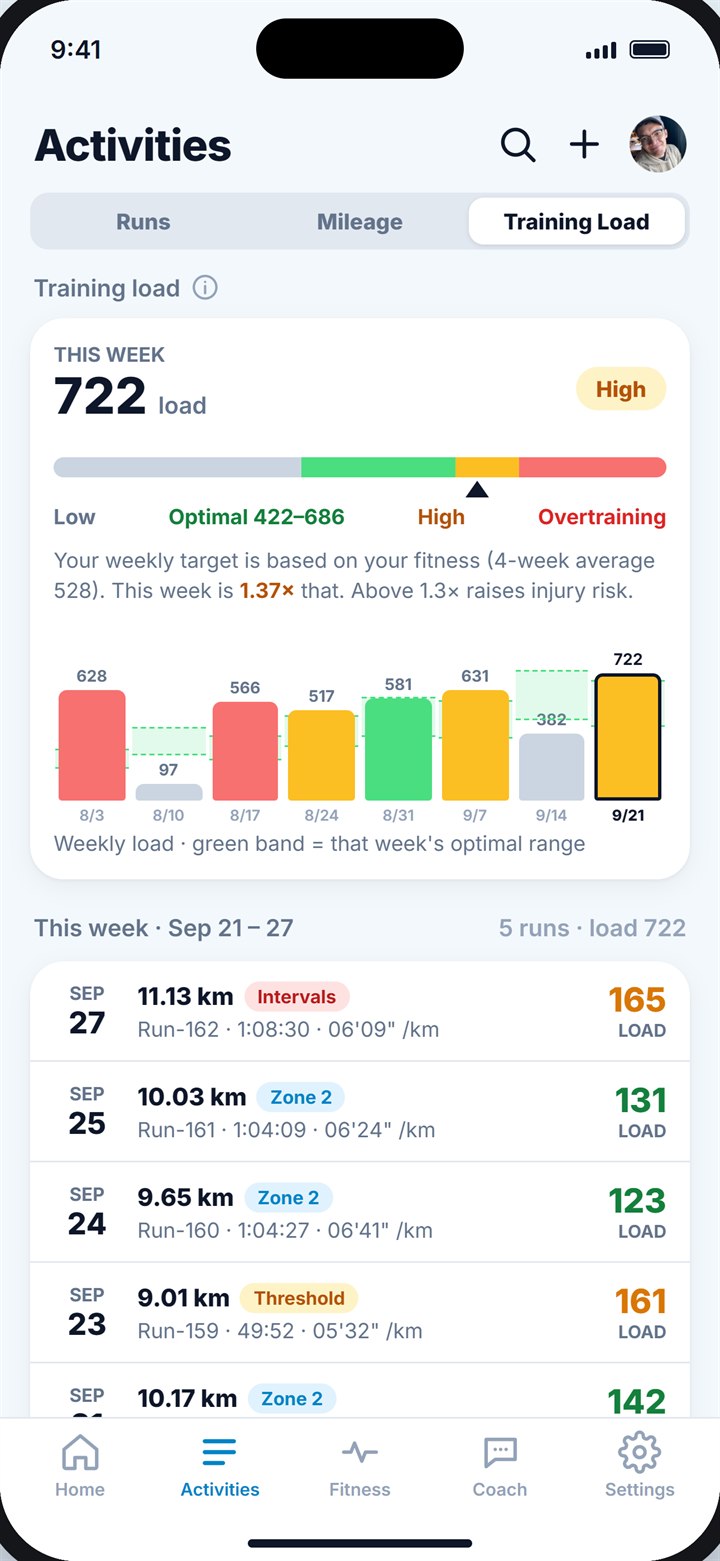
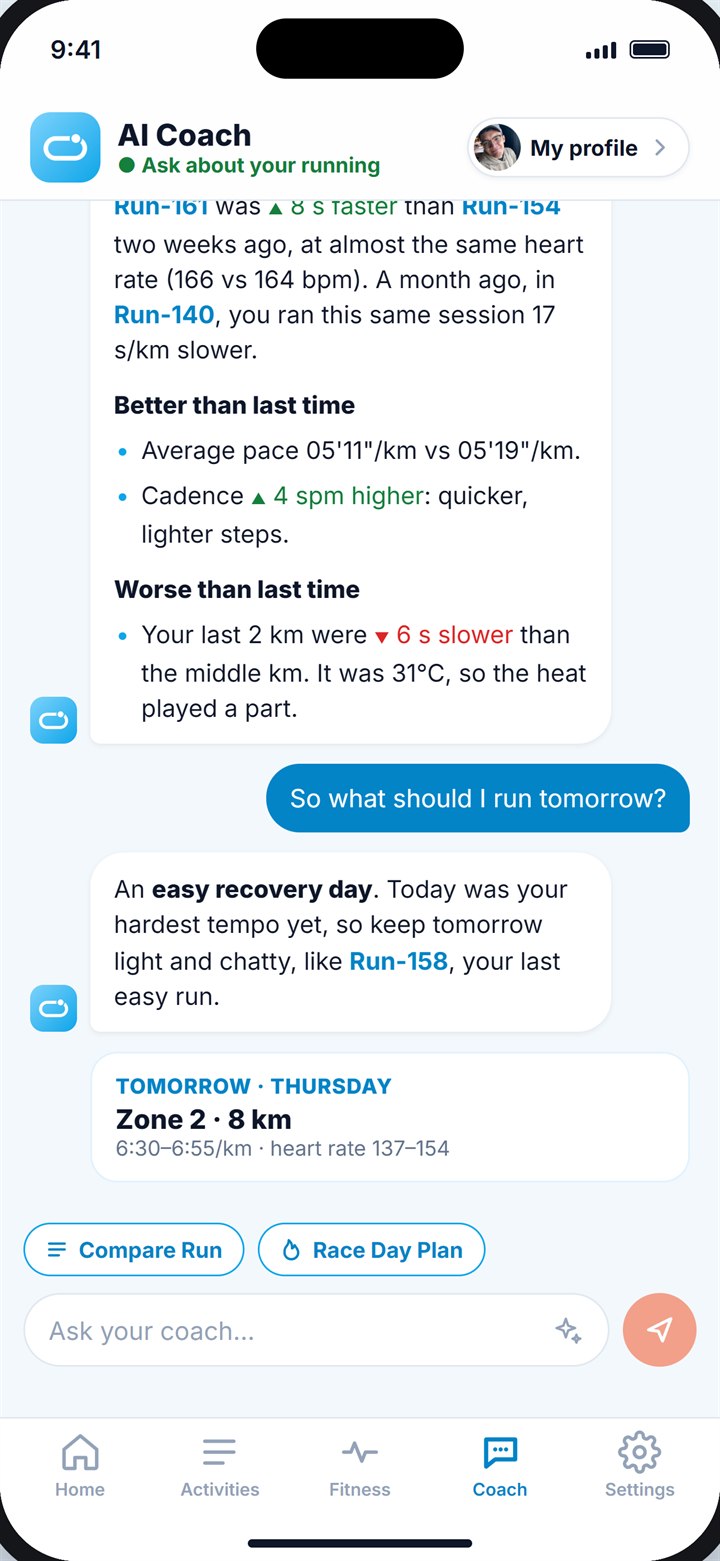
Training load and recovery (left) and the AI coach (right).
Key takeaways
- Recovery is when your body repairs and gets stronger; easy running can be part of it.
- An easy run needs about a day; hard sessions and long runs about 1.5 to 2 days; races much longer.
- Back-to-back hard days add up, so follow hard days with easy ones.
- Check legs, resting heart rate, HRV, sleep and mood before a hard session.
- Sleep, food, fluids and truly easy easy days are the best recovery tools.
Frequently asked questions
Should I run the day after a long run?
An easy, short run is usually fine and can help you feel less stiff. Keep it slow and save hard running for later in the week.
How many rest days a week do runners need?
Most runners do well with at least one full rest day a week. Beginners and runners building up often need two or three.
How long should I rest after a marathon?
Many runners take a few days completely off, then run easily for 2 to 4 weeks before any hard training. The "one easy day per mile" rule gives about 26 days.
Is muscle soreness a sign I should not run?
Mild soreness is normal and an easy run is fine. Sharp pain, pain that changes how you run, or soreness that gets worse over days means rest and get it checked.
Do recovery runs actually help?
Yes, if they are truly easy. They add aerobic training without much extra stress and keep blood flowing to tired muscles.

Keep reading
TrainingWhat is training load, and how much is too much?How hard your running really was: how training load is worked out, your optimal range, and how to build up safely.10 min read
 RecoveryWhat is HRV, and what does it say about your running?Heart rate variability in plain words: what it measures, what normal looks like, and how to use it to plan your training.9 min read
RacingFitness, fatigue and form: are you ready to race?The simple model coaches use to balance fitness and tiredness, and how to taper so you arrive at race day fit and fresh.10 min read