Your heart does not beat like a metronome. Even at rest, the gap between one beat and the next keeps changing by a few thousandths of a second. That tiny change, called heart rate variability or HRV, tells you a lot about how recovered your body is.
What HRV means
HRV is the variation in time between heartbeats, measured in milliseconds (ms). If your heart beats 60 times a minute, the beats are not exactly one second apart: one gap may be 0.98 seconds and the next 1.04 seconds. The bigger and more varied these gaps are, the higher your HRV.
Most watches measure it during sleep, when your body is calm and the reading is most reliable. Many use a measure called rMSSD, which looks at how much each gap differs from the one before.
Why HRV matters for runners
Your heartbeat is controlled by two sides of your nervous system:
So HRV works like a recovery gauge. When it is in your normal range, your body has handled your training. When it drops well below, your body is still dealing with stress, whether that comes from running or from the rest of your life.
What is a normal HRV?
There is no single normal number. HRV depends strongly on age, genes, fitness and even the watch you use. Healthy adults can be anywhere from about 20 ms to over 100 ms, and it tends to be lower as you get older.
How to read your HRV
| Status | What it means | What to do |
|---|---|---|
| Balanced | Inside your normal range. Your body is recovered. | Train as planned. |
| Low | Below your range. Your body is under stress. | Go easy or rest. |
| High | Above your range. Often after rest days. | Usually fine; carry on. |
Look at the trend, not one night
A single low night after a late dinner or a hard workout is normal. What matters more:
- Several low nights in a row mean stress is building up. Plan easier days.
- A slowly rising range over months usually means your aerobic fitness is improving.
- Low HRV plus a higher resting heart rate is a strong sign to take it easy, especially if you feel run down.
What lowers and raises HRV
How to use HRV to plan your training
- Build your baseline. Wear your watch to sleep every night for 2 to 4 weeks so it learns your normal range.
- Check it each morning together with how you feel and your resting heart rate.
- Balanced? Do your planned session, hard or easy.
- Low? Swap a hard session for an easy run, or take a rest day. Move the hard session to later in the week.
- Low for several days? Look at sleep, stress and your training load. Cut back until it returns to your range.
How to track your HRV in Windlace
- Link your watch and wear it to sleep. Windlace reads your overnight HRV from it.
- Open the Fitness tab. See last night's HRV with your normal range from the last 4 weeks shaded behind it.
- Read the status: Balanced (train as planned), Low (go easy) or High (usually fine, often after rest days).
- Check it with recovery and resting heart rate. All three on one page give the full picture before you run.
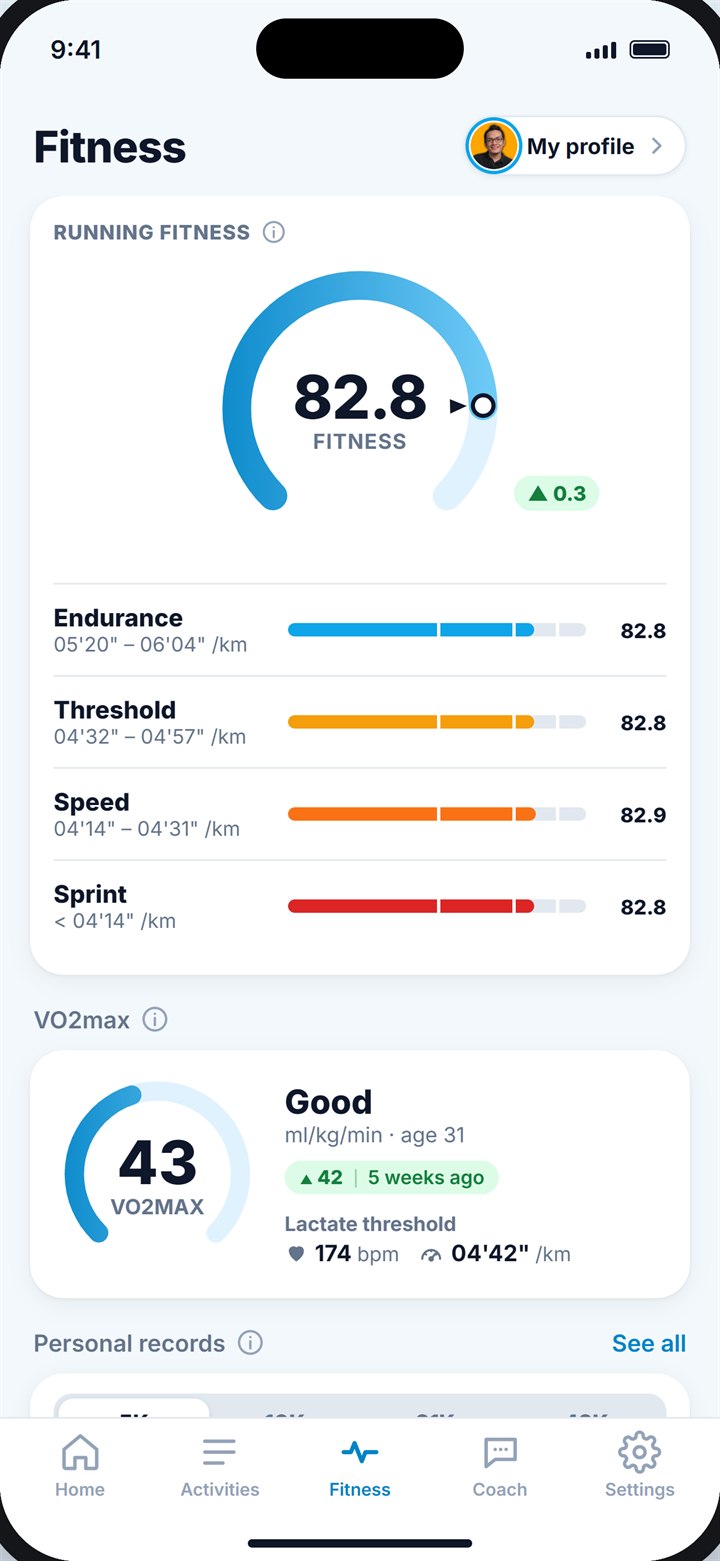
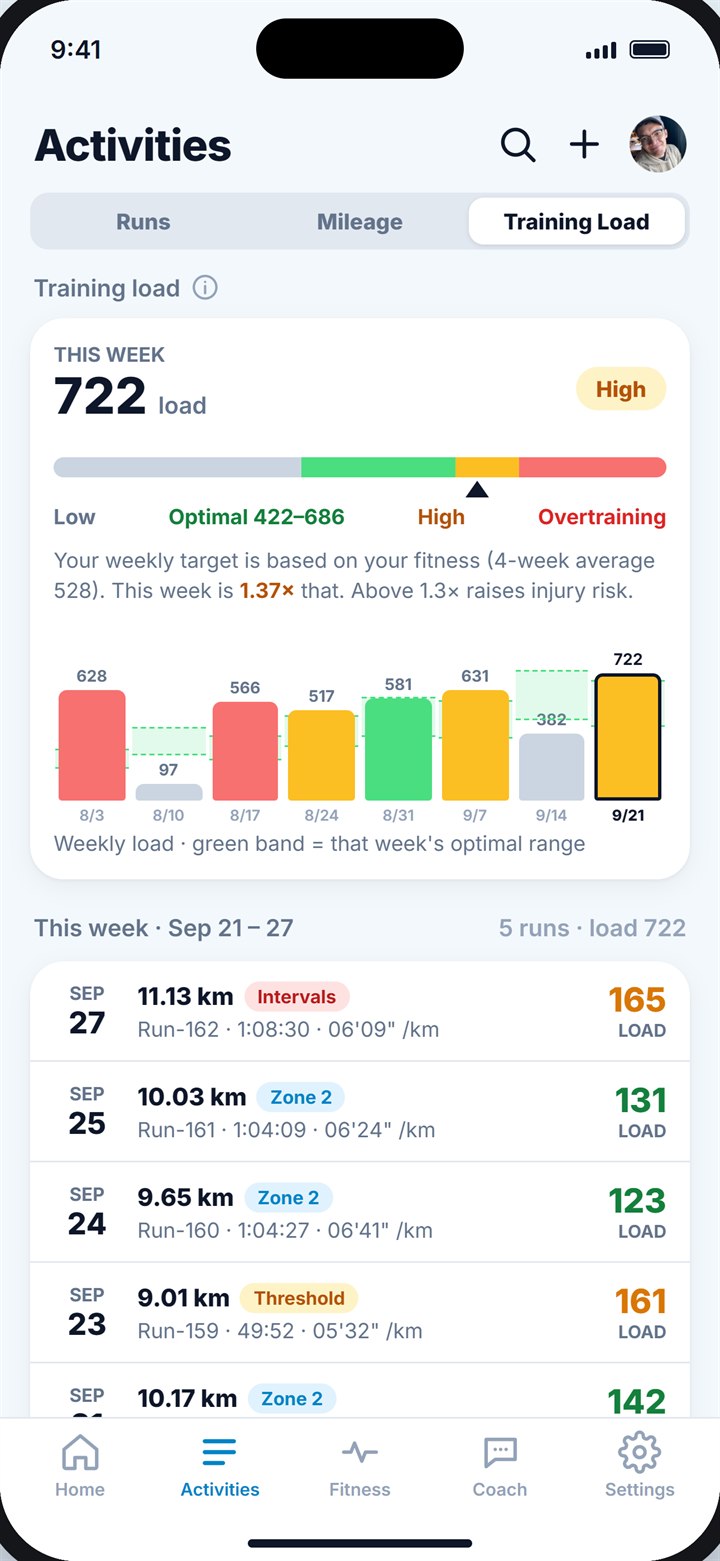
Overnight HRV on the Fitness tab (left) and training load (right).
Key takeaways
- HRV is the small variation in time between heartbeats, measured in milliseconds, usually during sleep.
- Higher HRV usually means your body is relaxed and recovered; lower means it is under stress.
- There is no universal normal: compare only with your own range from the last few weeks.
- Balanced: train as planned. Low: go easy. High: usually fine.
- Trends over several days matter more than one night.
Frequently asked questions
What is a good HRV for a runner?
There is no single good number. A good HRV is one inside your own normal range. Over months of training, a slowly rising range is a good sign.
Why is my HRV low after a run?
Hard or long running puts stress on your body, so the "fight or flight" side stays more active overnight. It usually returns to your range within a day or two.
Is high HRV always good?
Usually, yes, especially after rest days. A sudden, very high reading that comes with feeling unwell can sometimes be a sign of deep fatigue, so check how you feel.
Should I skip a workout if my HRV is low?
Not always skip, but swap it for something easier. If you also slept badly, feel tired or have a higher resting heart rate, take an easy day or rest.
Why is my HRV different from my friend's?
HRV depends on age, genes and the device. Two healthy runners can be far apart, so comparing numbers between people does not tell you much.

Keep reading
Heart rateResting heart rate for runners: what is normal?Typical ranges for runners, how to measure yours, why it drops as you get fitter, and what a sudden rise means.8 min read
RecoveryHow long should you recover after a run?Typical recovery times after easy runs, hard sessions and races, the signs you need more rest, and how to recover faster.9 min read
TrainingWhat is training load, and how much is too much?How hard your running really was: how training load is worked out, your optimal range, and how to build up safely.10 min read