Your resting heart rate is how many times your heart beats in one minute when you are fully at rest. It is free to measure, it changes as you get fitter, and it is one of the earliest warnings that you are tired or getting sick.
What resting heart rate means
Resting heart rate is the number of heartbeats per minute when your body is completely relaxed, usually measured just after waking or during sleep. Watches usually record the lowest heart rate overnight, which is the cleanest reading you can get.
A trained heart pumps more blood with each beat. It needs fewer beats to do the same job, so resting heart rate tends to fall as your running fitness improves.
What is a normal resting heart rate?
For adults, a resting heart rate of 60 to 100 beats per minute is the usual normal range given by health bodies such as the American Heart Association. Regular runners are often lower than that:
| Who | Typical resting heart rate |
|---|---|
| Adults in general | 60 to 100 bpm |
| Recreational runners | about 50 to 65 bpm |
| Well-trained endurance runners | about 40 to 55 bpm |
| Some elite endurance athletes | can be below 40 bpm |
How to measure your resting heart rate
With a watch
Wear it to bed. Most watches report the lowest or average heart rate during sleep each night. This is the easiest and most consistent way.
By hand
- Measure right after waking up, before you get out of bed, drink coffee or check your phone.
- Find your pulse on the inside of your wrist or the side of your neck, using two fingers.
- Count the beats for 60 seconds. Or count for 30 seconds and double it.
- Repeat for 3 to 5 mornings and take the average. That is your normal resting heart rate.
Why it drops as you get fitter
Easy aerobic running makes your heart muscle stronger and its chambers able to fill with more blood. Each beat moves more blood, so your heart can beat less often at rest. Over months of steady training, many runners see their resting heart rate fall by a few beats.
It does not keep falling forever. Once you have been training for a while, it settles at your own normal level and then moves mainly with tiredness, stress and health.
What a sudden rise means
A morning reading that is 5 or more bpm above your normal is a sign your body is under extra stress. Common causes:
What to do
- Check how you feel. Heavy legs, a sore throat or low mood all point the same way.
- Swap a hard session for an easy run or a rest day. One easy day costs nothing; training while sick can cost a week.
- Watch the next morning. If it is back to normal, carry on. If it stays high for several days, rest more, and see a doctor if you feel unwell.
Using resting heart rate for training zones
Your resting heart rate also helps set your heart-rate zones. The Karvonen method places each zone as a share of your heart rate reserve: the range between resting and maximum heart rate.
Zone heart rate = resting HR + (max HR − resting HR) × %
Example: resting 50 bpm, max 190 bpm, so the reserve is 140 beats. At 70%: 50 + 140 × 0.70 = 148 bpm.
| Zone | Starts at | Heart rate |
|---|---|---|
| Z2 Aerobic base | 60% | 134 bpm |
| Z3 Tempo | 70% | 148 bpm |
| Z4 Threshold | 80% | 162 bpm |
| Z5 VO2max | 90% | 176 bpm |
| Z6 Anaerobic | 95% | 183 bpm |
Because it uses your own resting heart rate, this method fits your heart better than a simple percentage of max heart rate.
How to track your resting heart rate in Windlace
- Link your watch. Windlace reads your overnight resting heart rate from it automatically.
- Open the Fitness tab. See this week's resting heart rate and the trend, with ▼ (lower than last week, a good sign) or ▲ (higher, could be fatigue, stress, heat or illness).
- Your heart-rate zones follow it. Windlace uses the Karvonen method, so your six zones update when your resting heart rate changes.
- Read it with HRV and recovery. A high resting heart rate together with low HRV is a strong sign to take it easy.
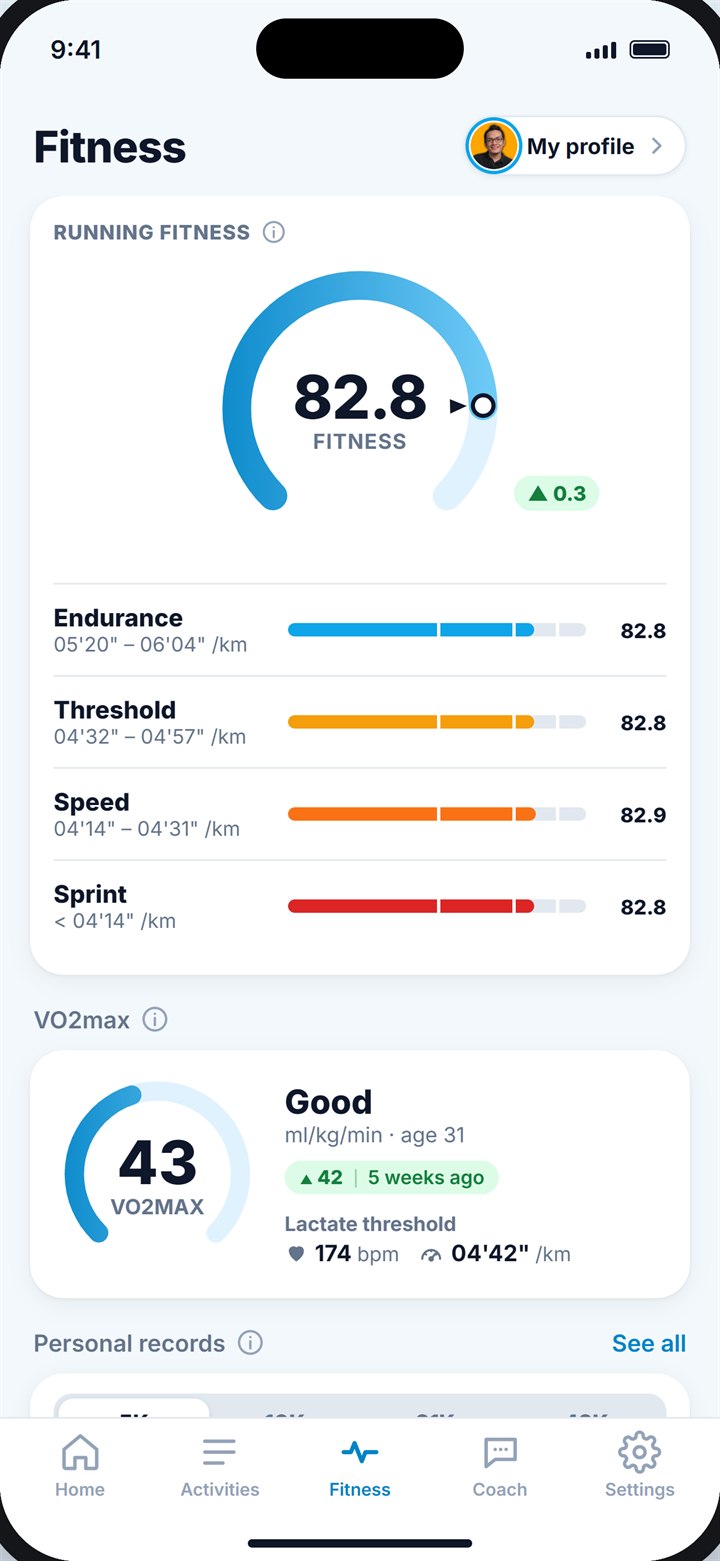
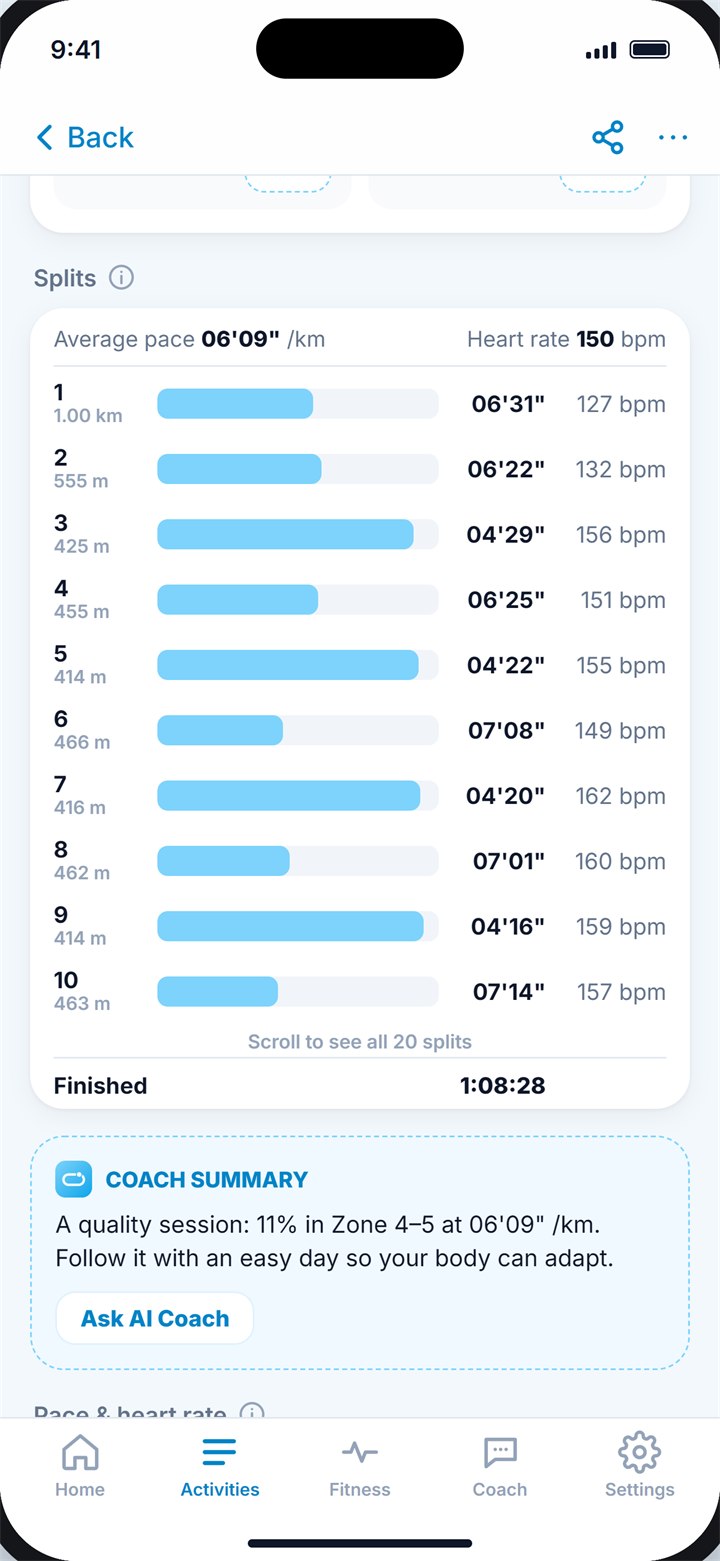
Resting heart rate on the Fitness tab (left) and heart-rate zones on a run (right).
Key takeaways
- Resting heart rate is your heartbeats per minute when fully at rest, best measured overnight or right after waking.
- Adults are usually 60 to 100 bpm; regular runners are often 50 to 65, and well-trained runners lower.
- Compare only with your own normal: genes and age make big differences between people.
- A reading 5+ bpm above your normal means stress, tiredness or illness: go easy that day.
- Resting heart rate also sets your heart-rate zones with the Karvonen method.
Frequently asked questions
What is a good resting heart rate for a runner?
Many recreational runners are around 50 to 65 bpm and well-trained runners around 40 to 55 bpm. The best sign is your own number falling or staying steady over months of training.
Is a resting heart rate of 45 too low?
For a fit runner who feels well, a resting heart rate in the 40s is common and usually healthy. If a low heart rate comes with dizziness, fainting or breathlessness, see a doctor.
Why is my resting heart rate high after a hard run?
Your body is still repairing muscles and refuelling, which keeps your heart working a little harder. It usually settles within a day or two.
How long does it take for resting heart rate to drop with running?
Many people see a change after a few months of regular easy running. The drop is gradual and stops once you reach your own normal level.
Does caffeine affect resting heart rate?
It can raise it for a few hours. Measure before your morning coffee for a fair reading.

Keep reading
RecoveryWhat is HRV, and what does it say about your running?Heart rate variability in plain words: what it measures, what normal looks like, and how to use it to plan your training.9 min read
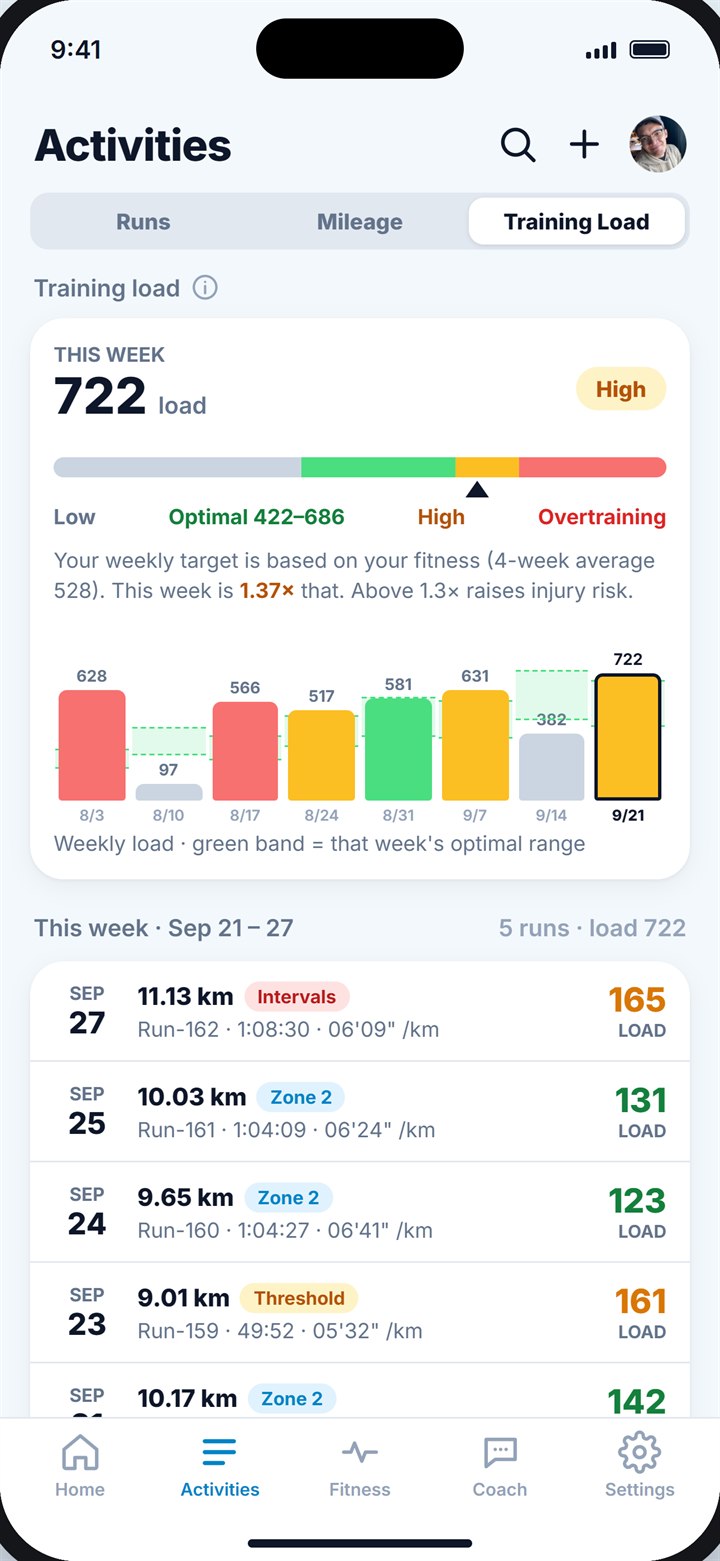 RecoveryHow long should you recover after a run?Typical recovery times after easy runs, hard sessions and races, the signs you need more rest, and how to recover faster.9 min read
FitnessWhat is VO2max, and how do you track it?The complete runner's guide: what the number means, what a good VO2max is for your age, how to test it, and the workouts that raise it.12 min read