Your VO2max is the most oxygen your body can use during hard exercise. The higher it is, the faster you can run before you hit your limit. Genes set part of it, but training can raise it a lot, especially in your first years of running.
How VO2max improves
VO2max improves when you regularly run hard enough to push your heart and lungs close to their limit, backed up by plenty of easy running. Two things change:
To push your heart to its maximum, you need to run at about 90 to 95% of your max heart rate, which is roughly your 3K to 5K race pace, for a few minutes at a time.
The best workouts for VO2max
How to do a VO2max session, step by step
- Warm up 10 to 15 minutes of easy running, then 3 or 4 short pickups of 15 to 20 seconds.
- Run the reps at a pace you can repeat. The last rep should be as fast as the first. If you slow down a lot, you started too fast.
- Jog the recoveries. Keep moving between reps; do not stop and stand.
- Aim for 12 to 20 minutes of hard running in total, for example 4 × 4 minutes or 5 × 1 km.
- Cool down 10 minutes of easy jogging.
How often to do VO2max workouts
- One hard VO2max session a week is enough for most runners. Two is the maximum, with easy days in between.
- Keep about 80% of your running easy. This "80/20" balance is used by most successful endurance athletes.
- Run more over time. More easy kilometres, added slowly, raise VO2max too, especially for newer runners.
- Take a lighter week every 3 to 4 weeks so your body can absorb the work.
How long does it take?
Many runners notice their VO2max start to rise after 4 to 6 weeks of consistent training that includes one interval session a week. Bigger changes come over 3 to 6 months.
How much it can rise depends on where you start. Beginners often see large gains in their first year. Experienced runners who already train hard improve more slowly, and their gains come more from threshold pace and running economy.
Other things that help
How to track your VO2max in Windlace
- Add your runs with your phone, your COROS watch or a file. No lab test needed.
- Open the Fitness tab. See your VO2max and how it compares with runners your age and sex.
- Check each interval session. Its focus shows as VO2max when most of the hard running was in Zone 5, with its training effect score.
- Ask the AI coach for a VO2max session that fits your week. It suggests; you decide.
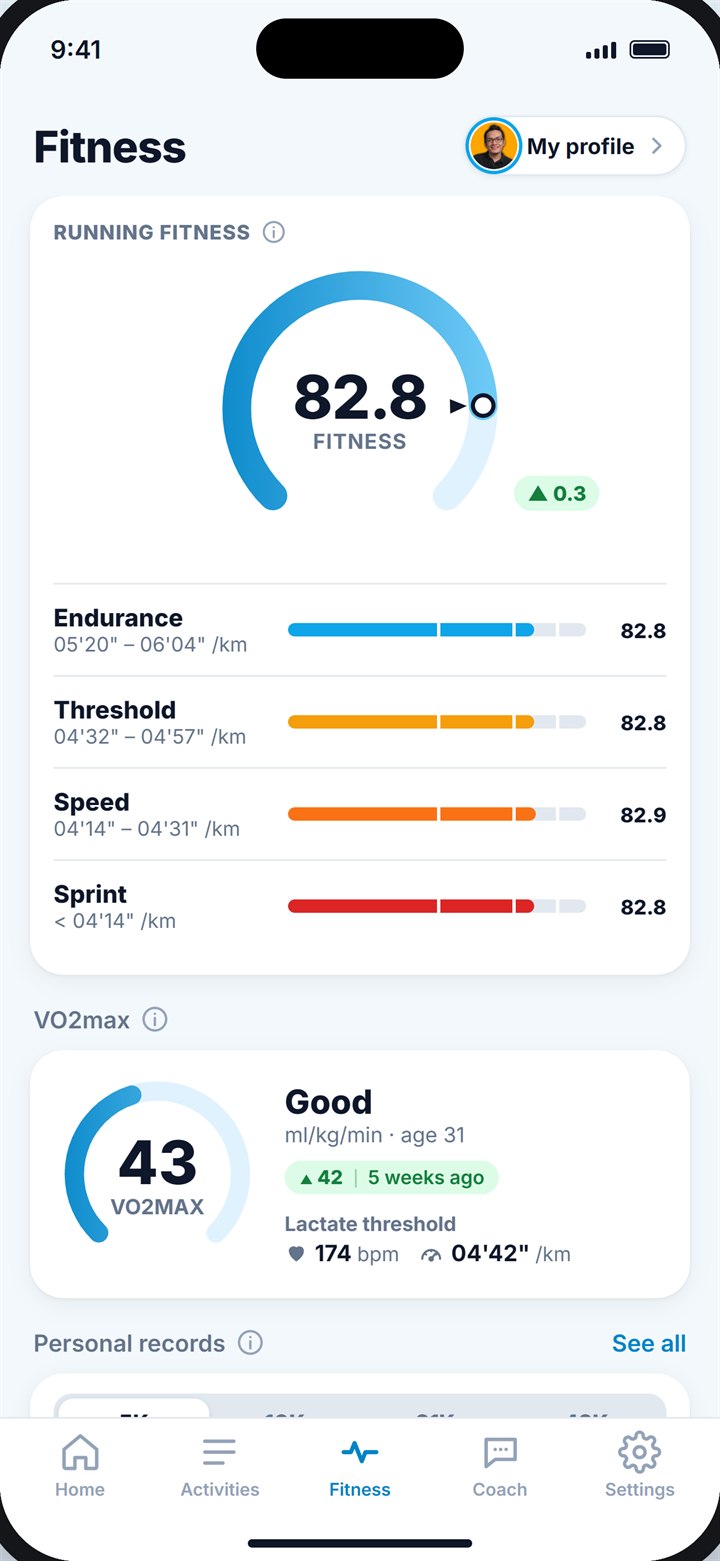
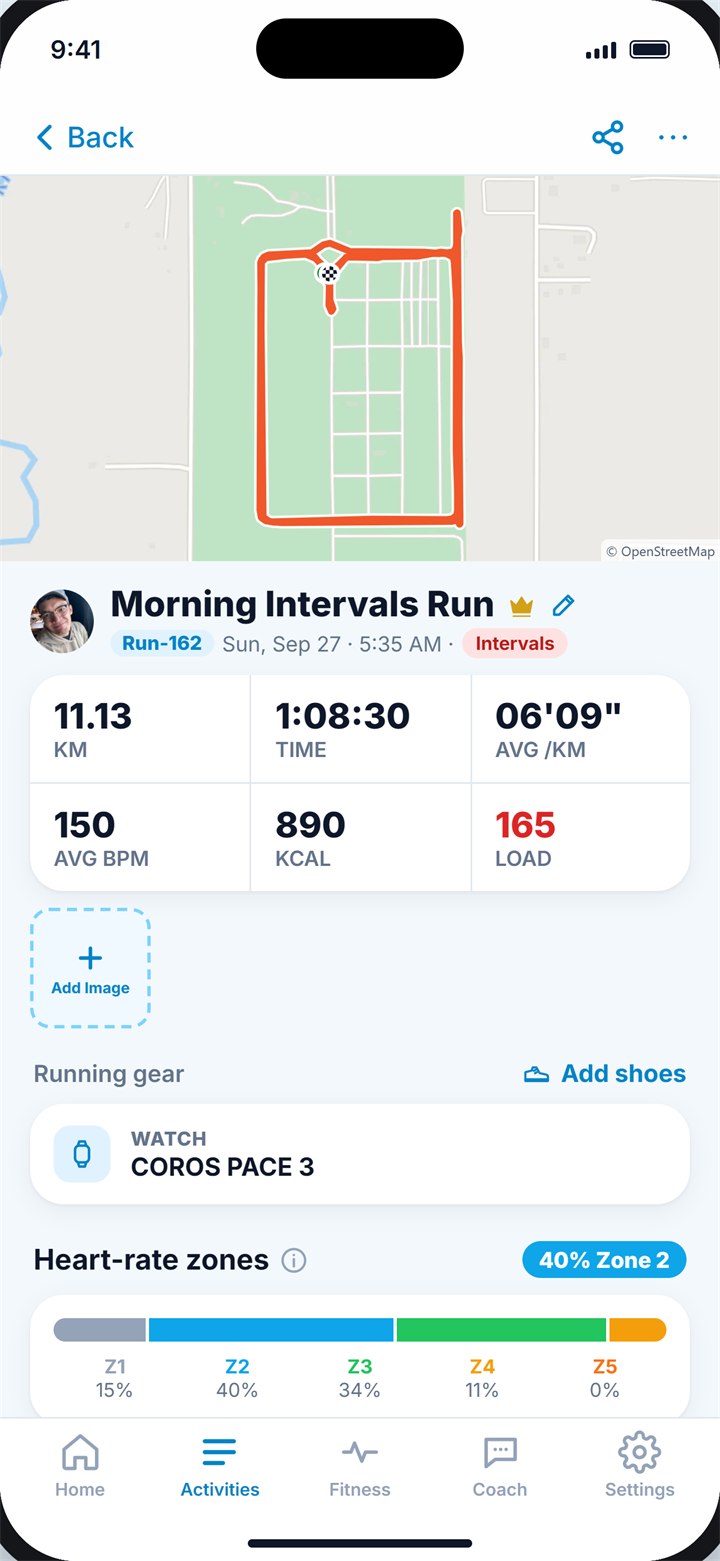
Your VO2max on the Fitness tab (left) and a run's training effect (right).
Key takeaways
- VO2max rises when you run close to your limit (about 90 to 95% of max heart rate) for a few minutes at a time.
- Top workouts: 4 × 4 minutes, 5 × 1 km, 30/30s and hill repeats, plus tempo runs.
- One VO2max session a week is enough; keep about 80% of your running easy.
- Expect changes after 4 to 6 weeks, and bigger ones over 3 to 6 months.
- Consistency, recovery and more easy kilometres matter as much as the hard sessions.
Frequently asked questions
What is the fastest way to improve VO2max?
One weekly interval session such as 4 × 4 minutes at 90 to 95% of max heart rate, plus steady easy running. Results usually start to show within 4 to 6 weeks.
Can you improve VO2max with easy running?
Yes, especially if you are newer to running. Easy running builds the muscles' ability to use oxygen. Adding intervals gives a further boost.
How much can VO2max increase?
It depends on your starting point and genes. Beginners often see big gains in their first year; trained runners see smaller gains.
Do I lose VO2max if I stop running?
It starts to drop after about 2 to 3 weeks off, and falls more over longer breaks. It comes back faster than it took to build.
Does VO2max decrease with age?
It tends to decline slowly with age, but regular training slows the drop a lot. Many older runners have a higher VO2max than inactive younger people.

Keep reading
FitnessWhat is VO2max, and how do you track it?The complete runner's guide: what the number means, what a good VO2max is for your age, how to test it, and the workouts that raise it.12 min read
FitnessVO2max chart by age and sexVO2max levels for men and women by age, from Poor to Powerful, and what a good VO2max is for you.7 min read
TrainingAerobic vs anaerobic training effectWhat the two 0 to 5 scores after a run mean, how they are worked out, and how to use them to balance your week.9 min read