The cushioning foam in running shoes slowly loses its bounce, the outsole wears down and the upper stretches. At some point, a shoe that felt great starts to feel flat, and your legs notice. Knowing when to replace your shoes helps you run comfortably and avoid paying for new pairs too early.
The short answer
Most running shoes last about 500 to 800 km (300 to 500 miles); light racing shoes often less, durable trainers often more. Replace them when they feel flat, the outsole is worn through, or you start getting new aches that go away in a fresher pair.
Why 500 to 800 km?
Lab tests on running shoe foams show that cushioning drops noticeably over the first few hundred kilometres, then more slowly. Shoe brands and running shops commonly give 500 to 800 km as a guide. It is a rough range, not a rule, and modern foams vary a lot. Some newer foams keep their bounce longer; very light racing foams often wear out faster.
What makes shoes wear faster or slower
Signs your shoes are worn out
- They feel flat: less spring, more "slap" on the ground.
- New aches: shins, knees or feet feel sore after runs that used to feel fine.
- Outsole worn through to the foam in high-wear spots.
- Creased, wrinkled midsole foam on the sides, especially under the heel or forefoot.
- The shoe leans or twists when placed on a flat table.
- The upper is torn or the heel no longer holds your foot.
Do worn shoes cause injuries?
The research is mixed. Running injuries usually come from training load (too much, too soon), not shoes alone. But worn shoes give less cushioning and can feel uncomfortable, and comfort is one of the best guides to choosing shoes that suit you. If new aches appear as a pair gets older, replacing it is a cheap, easy thing to try.
Should you rotate running shoes?
Many runners use two or more pairs: for example a cushioned trainer for easy and long runs and a lighter shoe for workouts and races. A study of recreational runners by Malisoux and colleagues (2015) found that those who rotated several pairs had a lower injury risk than those who always ran in the same pair. Rotation also lets foam recover between runs and spreads the wear.
| Pair | Use it for |
|---|---|
| Daily trainer | Easy runs, recovery runs |
| Cushioned long-run shoe | Long runs |
| Light or carbon-plated shoe | Tempo, intervals, races |
| Trail shoe | Off-road routes |
How to make shoes last longer
- Use them only for running, not for walking around all day.
- Untie them instead of pushing them off with the other foot.
- Let them dry naturally after wet runs; avoid heaters and dryers.
- Rotate pairs so each gets a rest day.
- Save racing shoes for workouts and races.
How often will you need new shoes?
It depends on how much you run. At 20 km a week, a pair lasting 600 km lasts about 30 weeks, roughly 7 months. At 50 km a week, the same pair lasts about 12 weeks. Knowing your weekly mileage makes it easy to plan ahead. See How much should you run per week?
Break in the new pair before the old one dies
Buy your next pair when the current one reaches about 400 to 500 km, and start mixing it in on short runs. By the time the old pair is done, the new one is ready for long runs and races. Never run a race in brand-new shoes: give them at least 2 or 3 runs first to find any rubbing spots.
Buying your next pair
- Comfort first: the shoe should feel good from the first step.
- Try them late in the day, when feet are slightly bigger, with your running socks.
- Leave a thumb's width of space in front of your longest toe.
- Change models gradually: a very different shoe (lower drop, thinner sole) needs a few weeks of short runs first.
New runner? Read How to start running for more gear basics.
Track shoe mileage in Windlace
- Add your running shoes in Account Settings under running shoes, and choose the kinds of run each pair is for (for example easy and long runs, or tempo and race).
- New runs get the right pair automatically, based on the run type; you can change the pair on any run.
- See each pair's distance add up, on the shoe list and on every run.
- Retire a pair when it is worn out. It keeps its distance, and you can bring it back or delete it later.
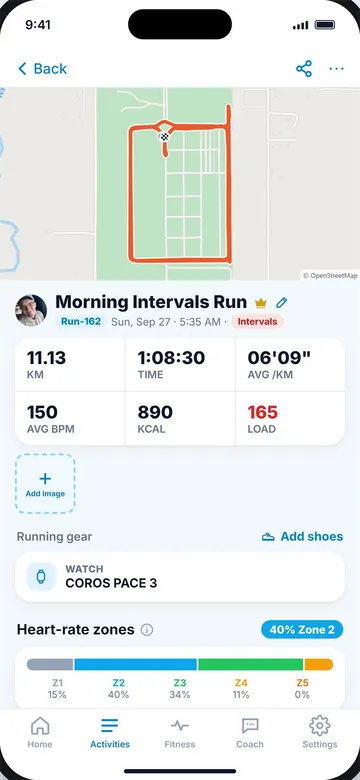
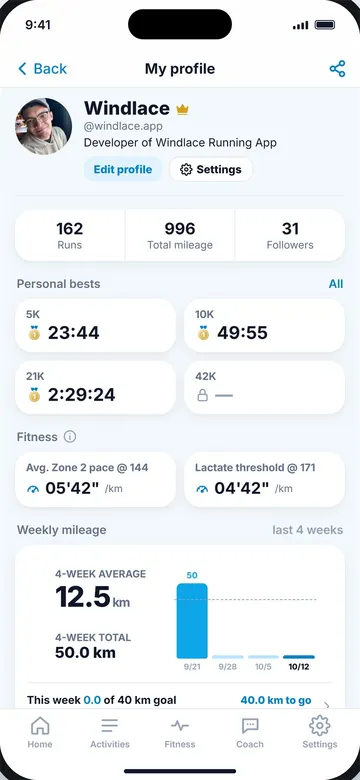
Run details (left) and your profile (right).
Key takeaways
- Most running shoes last about 500 to 800 km (300 to 500 miles).
- Racing shoes often wear out sooner; durable trainers often last longer.
- Replace shoes when they feel flat, the outsole is worn through or new aches appear.
- Rotating two or more pairs has been linked to a lower injury risk.
- Tracking each pair's distance tells you when to start looking for a new pair.
Frequently asked questions
How many km do running shoes last?
Usually about 500 to 800 km. Light racing shoes often less, durable trainers often more.
How do I know if my running shoes are worn out?
They feel flat, the foam is creased, the outsole is worn through, or new aches appear after runs.
Can old running shoes cause injury?
Injuries usually come from training load, but worn shoes give less cushioning and can contribute to discomfort.
Should I have more than one pair of running shoes?
It helps. Rotating pairs spreads the wear and was linked to fewer injuries in one study.
Do running shoes wear out if I do not use them?
Slowly. Foam can harden over several years in storage, so very old unused shoes may feel firmer than new ones.
Can I use old running shoes for walking?
Yes. Retired running shoes are often fine for walking, gardening or the gym.

Keep reading
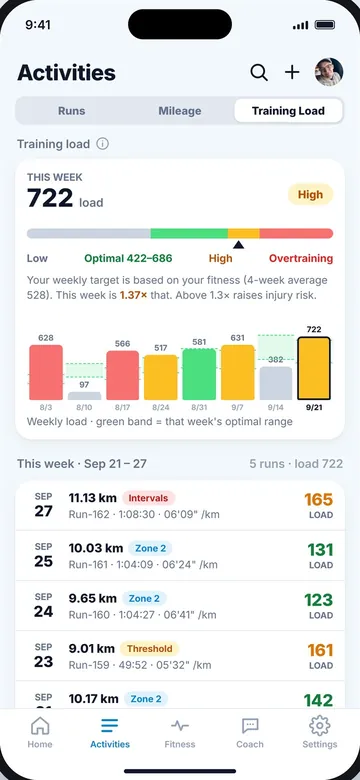 TrainingHow much should you run per week?Typical weekly distance for 5K to marathon, how to build it safely, and signs you are doing too much.9 min read
BeginnersHow to start running: a simple beginner's guideRun-walk your first weeks, how often and how far to go, the right pace, what to wear and how to keep going.10 min read
FormWhat is a good running cadence?Why 180 steps per minute is a myth, typical cadence by pace, and how to raise yours safely by 5 to 10%.9 min read