Every training plan works by adding stress, then letting your body recover and adapt. When the stress keeps coming and the recovery does not, the process breaks down. Instead of getting fitter, you get slower, more tired and more likely to get ill or injured. Catching it early is far easier than fixing it later.
What overtraining is
Overtraining is when the stress of training (plus life) is greater than your recovery for long enough that performance drops and stays down; early warning signs are heavy legs, a raised resting heart rate, lower HRV, poor sleep, low mood and runs that feel harder at the same pace.
Scientists describe three stages, as set out in a joint statement by the European College of Sport Science and the American College of Sports Medicine (Meeusen and colleagues, 2013):
| Stage | What happens | Recovery time |
|---|---|---|
| Functional overreaching | Planned hard block, short dip, then you get fitter | Days |
| Non-functional overreaching | Performance stays down, fatigue lingers | Weeks |
| Overtraining syndrome | Long-term drop in performance, mood and health | Months |
True overtraining syndrome is rare in recreational runners. Non-functional overreaching is much more common, and it is the stage worth catching.
Warning signs
One sign on one day means little. A cluster of signs lasting more than a few days is the real warning.
What your data can show you
- Resting heart rate: a rise of about 5 to 10 beats above your normal for several mornings. See Resting heart rate for runners.
- HRV: overnight HRV below your usual range for several days in a row. See What is HRV?
- Pace at the same heart rate: your easy or Zone 2 pace getting slower over 1 to 2 weeks.
- Training load: weeks well above your usual 4-week level, with no easier weeks.
- Recovery status: staying Tired or Exhausted even after easy days.
Common causes
- Building distance too fast, or adding speed and distance at the same time.
- Easy runs that are not easy, so every day adds fatigue.
- No easier weeks for months on end.
- Not eating enough, especially carbohydrate, for the training you do.
- Short sleep and life stress: work, family and travel all draw on the same recovery.
- Racing too often, without recovery between races.
What to do if you think you are overreached
- Cut back right away: take 2 to 3 rest days, then run only short, easy runs.
- Drop all hard sessions until your resting heart rate and HRV are back to normal and easy runs feel easy again.
- Sleep more and eat enough, including carbohydrate.
- Reduce other stress where you can.
- Return gradually: start around 50 to 70% of your previous weekly distance and build back over 2 to 4 weeks.
- See a doctor if fatigue lasts more than 2 to 3 weeks despite rest, or if you have other symptoms. Low iron, thyroid problems and illness can look like overtraining.
How to prevent it
RED-S: when the problem is energy
Some runners who look overtrained are actually under-fuelled. Relative Energy Deficiency in Sport (RED-S) happens when you eat too little for the training you do. It can cause fatigue, frequent injuries (including stress fractures), missed periods in women and a drop in performance. If you are training hard while trying to lose weight, or your energy has been low for weeks, talk to a doctor or sports dietitian.
Example: catching it early
A runner adds a third weekly workout and 25% more distance while preparing for a half marathon. Two weeks later, resting heart rate is 6 beats higher than normal, easy runs feel heavy, and Zone 2 pace has slowed by 15 seconds per km. Instead of pushing on, the runner takes three easy days and drops the extra workout. A week later the numbers are back to normal, and training continues at a more sustainable level. Catching it at this stage cost a few days instead of weeks.
How Windlace helps you spot it
- Training load: see when a week moves from Optimal to High or Overtraining compared with your usual training.
- Recovery: Fresh, Good, Tired or Exhausted after every run, with hours until recovered.
- Resting heart rate and overnight HRV from your watch, next to each other on the Fitness tab.
- Average Zone 2 pace: if it gets slower at the same heart rate, you may need more rest.
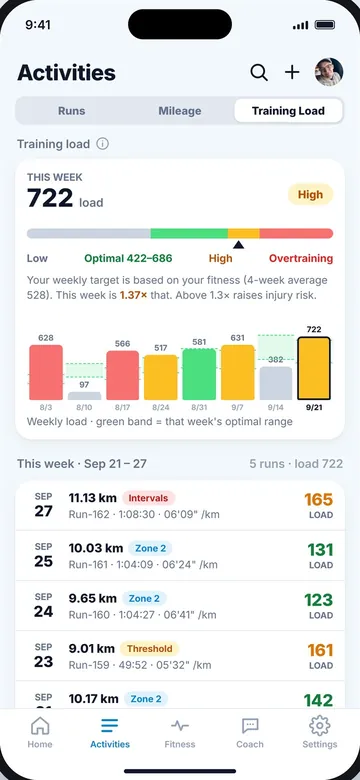
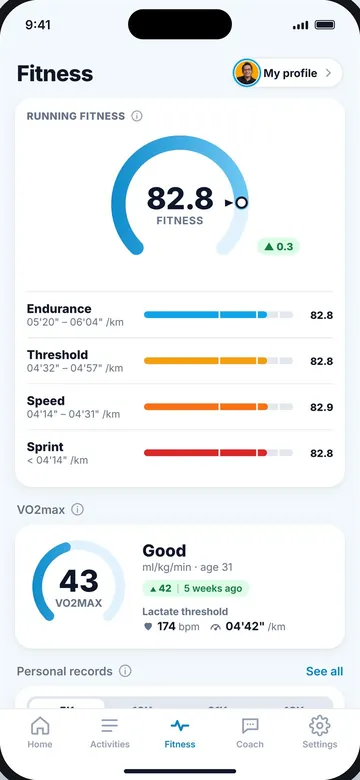
Training load (left) and fitness and recovery (right).
Key takeaways
- Overtraining happens when training and life stress outweigh recovery for too long.
- Early signs: heavy legs, raised resting heart rate, lower HRV, poor sleep and slower easy pace.
- Non-functional overreaching (weeks to recover) is common; true overtraining syndrome is rare.
- If you spot a cluster of signs, rest 2 to 3 days, drop hard sessions and rebuild gradually.
- Easy days, gradual building, easier weeks, sleep and enough food prevent most cases.
Frequently asked questions
What are the first signs of overtraining?
Heavy legs, easy runs feeling hard, a resting heart rate higher than normal, lower HRV, poor sleep and low motivation.
How long does it take to recover from overtraining?
Short overreaching takes days to a couple of weeks. True overtraining syndrome can take months.
Does a high resting heart rate mean overtraining?
Not always, but a rise of 5 or more beats for several mornings, with other signs, often means you need more recovery.
Can you overtrain as a beginner?
Yes, usually by increasing distance or intensity too quickly. Beginners also need more rest days.
Is overtraining the same as being tired?
No. Normal tiredness after a hard week clears in a few days of easier running. Overreaching lasts longer and comes with falling performance and other signs.
Should I keep running if I think I am overtrained?
Rest for a few days, then run only short, easy runs until your numbers and energy are back to normal.

Keep reading
RecoveryRest days for runners: how many do you need?How many rest days you need by level, what to do on them, and the signs you need a day off.9 min read
RecoveryWhat is HRV, and what does it say about your running?Heart rate variability in plain words: what it measures, what normal looks like, and how to use it to plan your training.9 min read
Heart rateResting heart rate for runners: what is normal?Typical ranges for runners, how to measure yours, why it drops as you get fitter, and what a sudden rise means.8 min read